
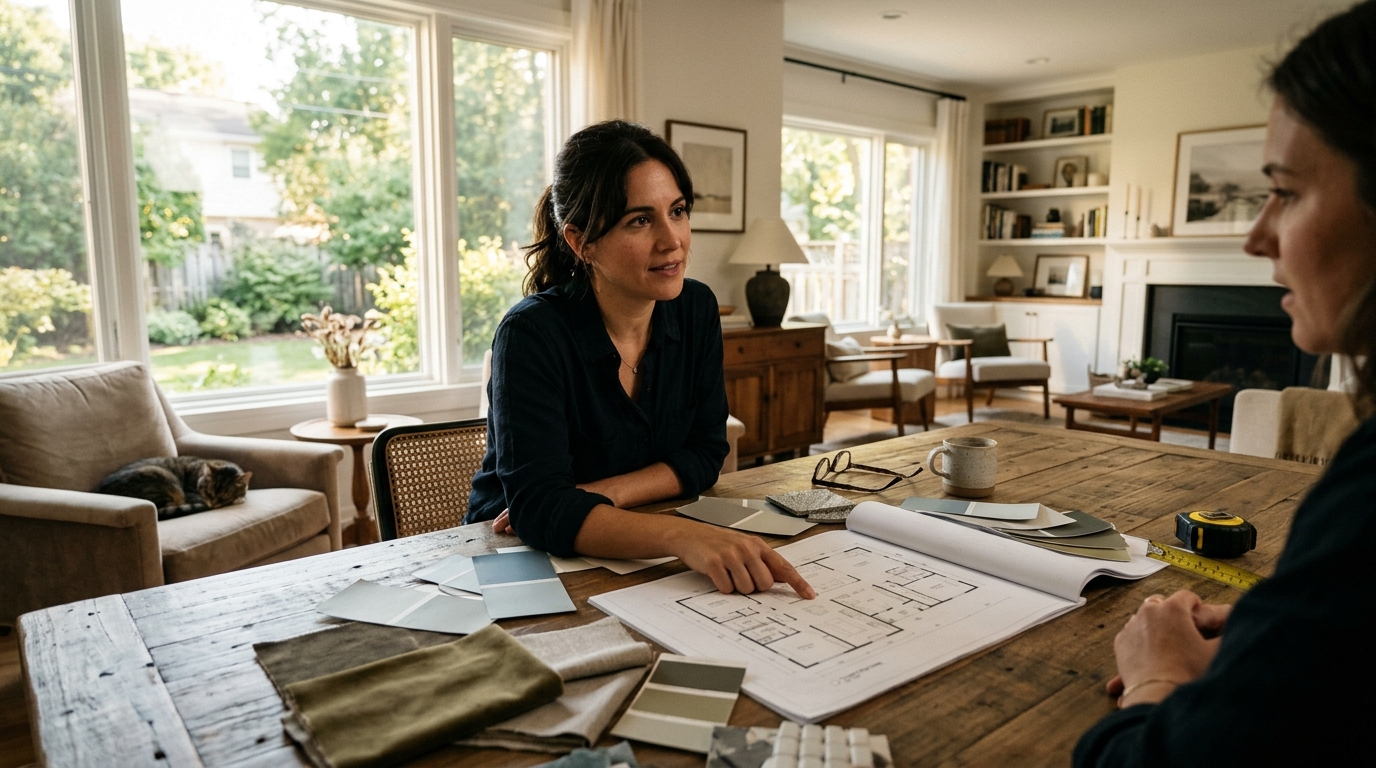
Every homeowner encounters design challenges, whether it is an awkward room layout, poor lighting, clashing color palettes, or a budget that feels too tight. The good news is that most residential interior design problems have practical, straightforward solutions once you know what to look for. At Julieta Alvarez Interiors, we have spent over a decade helping homeowners across New Jersey, New York, Westchester, and Connecticut transform frustrating spaces into functional, beautiful homes. Below, we break down the most common issues and exactly how to fix them.
Awkward Room Layouts
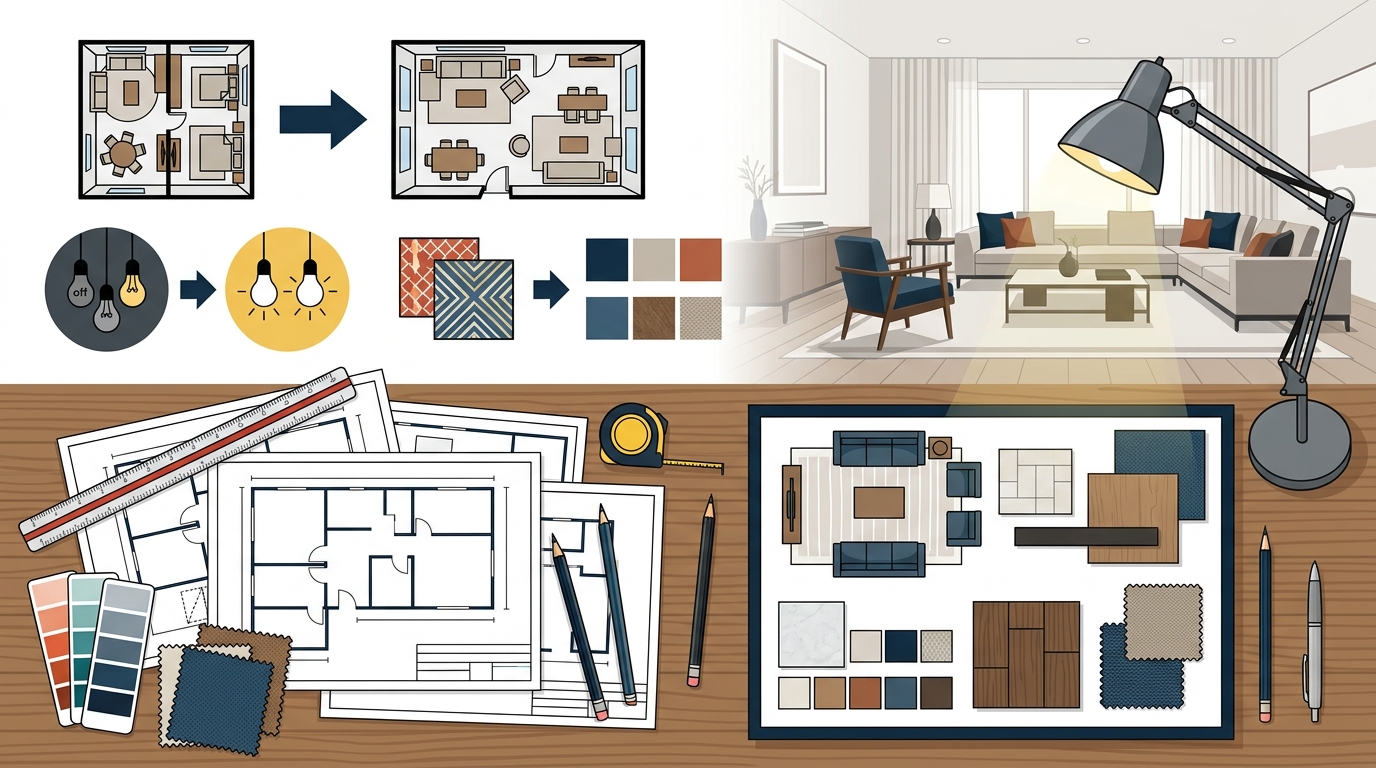
A floor plan is the foundational blueprint that determines how furniture, traffic flow, and daily activities interact in a space. When a layout feels "off," it is usually because furniture placement ignores natural pathways or focal points. A sofa blocking a doorway or a dining table that is too large both create daily friction.
The fix starts with measuring your room and mapping traffic lanes before buying a single piece of furniture. Aim for at least 36 inches of clearance in major walkways. Our Montclair living room project is a great example of how repositioning seating around a natural focal point opened up an entire family area.
Poor or Unbalanced Lighting
Layered lighting is the practice of combining ambient, task, and accent light sources to create depth and warmth in a room. Relying on a single overhead fixture is one of the most common mistakes homeowners make, resulting in harsh shadows and flat-feeling spaces.
Three Layers to Get Right
Start with ambient lighting such as recessed cans or a central pendant, then add task lighting like table lamps or under-cabinet strips, and finish with accent lighting to highlight art or architectural details. Mirrors strategically placed opposite windows can also amplify natural light without any electrical work.
Mistakes to Avoid
Avoid blocking windows with heavy curtains or oversized furniture. According to Planner 5D, good lighting uses multiple sources at different heights to create a welcoming atmosphere. Dimmer switches are an inexpensive upgrade that dramatically increases flexibility.
Color Palette Confusion
A color palette is a curated set of 3 to 5 complementary hues used consistently throughout a space to create visual harmony. Choosing paint before selecting furnishings and fabrics is a common misstep that leads to mismatched rooms.
Always select your largest textile pieces first, like sofas, rugs, and curtains, then pull wall colors from those fabrics. Thinking in color families ensures consistency. If you are unsure where to begin, our color consultation service can help you lock in a palette before any paint hits the wall.
Making Small Spaces Feel Larger
Small rooms only feel cramped when design choices work against the space. Light or neutral color schemes, mirrors, and low-profile furniture all create the illusion of openness. Multi-functional pieces, like storage ottomans or nesting tables, serve double duty without adding bulk.
Furniture Sizing Guide
| Room Size | Sofa Length | Coffee Table | Rug Size |
|---|---|---|---|
| Under 150 sq ft | 60–72 in | 36 in round | 5×7 ft |
| 150–250 sq ft | 72–84 in | 42–48 in | 6×9 ft |
| 250–400 sq ft | 84–96 in | 48–54 in | 8×10 ft |
| 400+ sq ft | 96+ in or sectional | 54+ in | 9×12 ft |
Our work in Hoboken apartments regularly demonstrates how the right-sized furniture transforms a tight floor plan into a comfortable living space.
Storage Shortages and Clutter
Clutter is the number-one enemy of good design. Newer builds often lack adequate built-in storage, and older homes may have closets that do not meet modern needs. Floating shelves, built-in cabinetry, and multi-use furniture can dramatically increase usable storage without eating into your floor area.
In our full home renovation in Montclair, custom built-ins in the living room and mudroom eliminated visible clutter while adding architectural interest to the home.
Staying on Budget Without Sacrificing Style
Budget overruns are among the most stressful design problems homeowners face. According to Pen-Ex Insurance, dealing with multiple vendors, manufacturers, and installers can easily foul a project budget through pricing errors and plan changes.
Budget-Smart Strategies
Invest the largest share of your budget in high-use items like sofas, mattresses, and kitchen countertops. Save on accessories, throw pillows, and decorative objects that can be swapped seasonally. Get all quotes in writing and maintain a 10 to 15 percent contingency fund for unexpected costs. A phased approach, tackling one room at a time, can also spread expenses over months.
Lack of Design Cohesion Between Rooms
When each room is decorated in isolation, the result is a home that feels disjointed. A modern living room next to a farmhouse-style kitchen creates visual tension rather than flow. The solution is to establish a unifying thread, whether that is a shared color family, a consistent hardware finish, or a recurring material like natural wood or brass.
Browse our full design portfolio to see how we maintain cohesion across entire homes, from the warm transitional kitchen to the living room and beyond.
Key Takeaways
- Always measure your room and map traffic flow before selecting furniture.
- Use layered lighting (ambient, task, accent) instead of relying on a single overhead fixture.
- Choose textiles and furnishings before paint colors to ensure a cohesive palette.
- Scale furniture to your room size; oversized pieces make small rooms feel cramped.
- Invest in smart storage solutions like built-ins and multi-functional furniture to beat clutter.
- Maintain a 10 to 15 percent budget contingency to absorb unexpected costs.
- Create cohesion by repeating materials, finishes, or a shared color family across rooms.
Frequently Asked Questions
What is the most common residential interior design mistake?
The most common mistake is choosing paint colors before selecting furniture and fabrics. This often leads to mismatched rooms and costly repainting. Start with your largest pieces and pull paint colors from their palette.
How do I make a small room look bigger without renovation?
Use light, neutral paint colors, hang mirrors to reflect natural light, choose low-profile and multi-functional furniture, and keep clutter to a minimum. A well-placed area rug that is proportional to the room also helps anchor the space.
How much should I budget for an interior design project?
A common rule of thumb is to spend between 7 and 10 percent of your home's value on furnishings and design. Always include a 10 to 15 percent contingency fund. At Julieta Alvarez Interiors, we offer flexible, budget-adaptive planning for projects of all sizes.
Do I need a professional interior designer or can I DIY?
DIY works well for small updates like accessories or paint. For whole-home renovations, kitchen remodels, or complex layouts, a professional designer saves time and prevents costly mistakes. Our team handles projects from single-room makeovers to full-home transformations.
How do I create a cohesive look throughout my home?
Pick a unifying element such as a color family, a hardware finish (brushed brass, matte black), or a recurring material like natural wood. Repeat that element in every room to tie the design together seamlessly.
What lighting mistakes should I avoid?
Avoid relying on a single ceiling light per room, blocking natural light with heavy window treatments, and ignoring dimmer switches. Layer ambient, task, and accent lighting for a balanced, inviting atmosphere.
How long does a typical residential interior design project take?
A single-room refresh can take 4 to 6 weeks, while a full-home renovation typically runs 3 to 6 months depending on scope, contractor availability, and custom orders. Planning early and ordering long-lead items first helps keep timelines on track.
Does Julieta Alvarez Interiors work outside New Jersey?
Yes. While based in New Jersey, we serve homeowners throughout the tri-state area including New York City, Westchester, and Connecticut. Visit our contact page to start a conversation about your project.
Ready to Solve Your Design Challenges?
Whether you are wrestling with a tricky layout, choosing colors, or planning a full renovation, Julieta Alvarez Interiors is here to help. Schedule a consultation today and let us turn your design problems into your home's best features.