

Planning a residential interior design project can feel overwhelming, but having the right tools and resources makes all the difference between a chaotic renovation and a beautifully coordinated transformation. Whether you are refreshing a single room or tackling a full home renovation, understanding what you need before you start saves time, money, and stress. This guide breaks down every essential category of tools and resources, from physical measuring instruments to cutting-edge design software, so you can approach your next project with confidence.
Planning and Measurement Tools
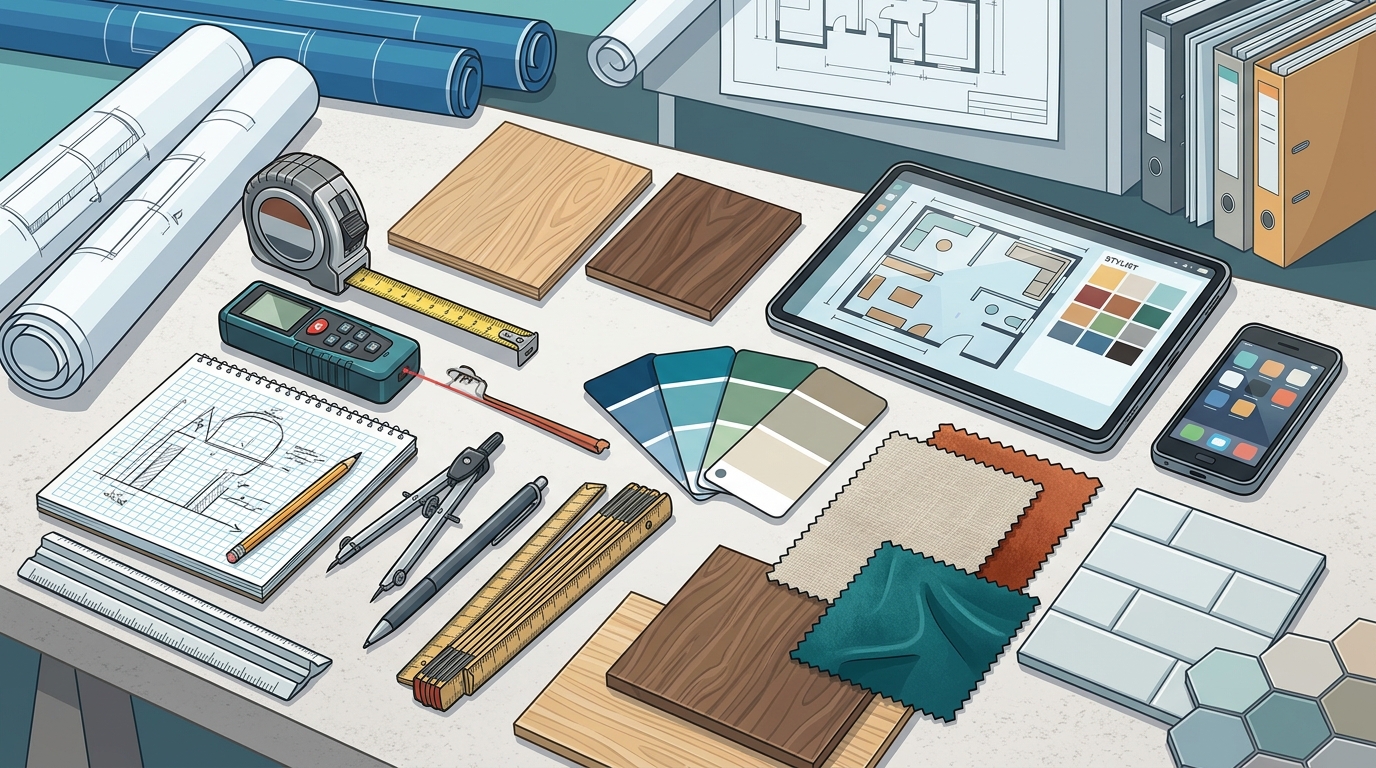
Every successful residential design project starts with accurate measurements. A laser distance measurer is the modern standard for capturing room dimensions quickly and precisely, though a traditional 25-foot measuring tape remains indispensable as a backup. You will also need a level, a stud finder, and graph paper or a gridded notebook for sketching initial layouts.
Drafting Supplies
A drafting supply kit is the collection of physical instruments used to create scaled drawings by hand. Scaled rulers, a compass, triangles, erasers, and blending stumps all support precise floor plans and elevations. Many designers start with hand sketches on trace paper before moving to digital tools, as ArchitectureCourses.org recommends.
Sketchbooks and Color Books
Keeping a dedicated sketchbook helps you record ideas, client preferences, and spatial concepts in one place. Color swatch books from paint manufacturers like Benjamin Moore or Sherwin-Williams let you compare finishes under your home's specific lighting conditions, which is critical since colors look different on a screen than on a wall.
Design Software and Digital Resources
Interior design software is any digital application that allows users to create 2D floor plans, 3D renderings, or virtual walk-throughs of a space. Today's homeowners and professionals have access to powerful options at every price point.
| Software | Best For | Price | Skill Level |
|---|---|---|---|
| SketchUp | 3D conceptual modeling | Free (web) / $349/yr | Beginner to Intermediate |
| AutoCAD | Precise 2D floor plans | $1,975/yr | Intermediate to Advanced |
| Planner 5D | Quick residential layouts | Free / Premium plans | Beginner |
| Revit | Complex whole-home projects | $3,575/yr | Advanced |
| RoomSketcher | Easy client presentations | Free / $49-$99/yr | Beginner |
For quick residential rooms and early client discussions, browser-based tools like Planner 5D and RoomSketcher provide a fast learning curve. For detailed professional work, AutoCAD remains the industry standard for drafting precise floor plans and elevations.
Color Consultation Tools
Color selection is one of the most impactful decisions in any residential project. A color consultation is the process of evaluating wall colors, trim finishes, and accent tones in the context of a room's natural light, architecture, and furnishings. Digital tools like Sherwin-Williams ColorSnap let you match real paint colors from photos, while Adobe Color helps generate cohesive palettes.
Physical fan decks and large paint samples remain essential. Always test at least two to three swatches on your actual walls and observe them at different times of day. At Julieta Alvarez Interiors, color consultations factor in the architecture of the home and the amount of natural light each room receives to ensure the final palette feels harmonious.
Sourcing Furnishings, Art, and Materials
Sourcing is the process of selecting and procuring furniture, textiles, lighting, art, and accessories that bring a design concept to life. For a residential project, you typically need resources across several categories:
- Furniture: Sofas, tables, chairs, beds, and storage pieces
- Textiles: Rugs, curtains, throw pillows, and upholstery fabrics
- Lighting: Chandeliers, sconces, table lamps, and recessed fixtures
- Art and accessories: Wall art, sculptures, vases, and decorative objects
- Hard materials: Tile, countertops, millwork, and flooring
Working with a designer gives you access to trade-only showrooms and wholesale pricing. Julieta Alvarez Interiors sources from top-rated manufacturers for everything from rugs and window treatments to custom furnishings and greenery, ensuring quality and style align with each client's vision.
Project Management Resources
Keeping a renovation on track requires structured project management. Useful resources include scheduling tools like Asana or Monday.com, shared spreadsheets for tracking budgets and orders, and a centralized folder system for contracts, receipts, and product specifications.
Budget Tracking
Create a detailed spreadsheet that separates costs into categories: design fees, materials, labor, furnishings, and a contingency buffer of 10 to 20 percent. Track each purchase against the budget in real time to avoid surprises.
Communication Tools
Regular communication between homeowners, designers, and contractors is critical. Tools like shared Pinterest boards, Houzz ideabooks, or simple photo-sharing albums help keep everyone aligned on the aesthetic direction. Julieta Alvarez conducts an in-depth style discovery with every client to align expectations before a single order is placed.
When to Bring in a Professional Designer
DIY tools are powerful, but complex projects benefit enormously from professional expertise. A full-service interior design firm handles everything from concept development and floor planning to product management and installation oversight. This is especially valuable for kitchen renovations, bathroom remodels, and whole-home projects where coordination among electricians, plumbers, and carpenters is essential.
Professional designers also bring access to trade resources, established contractor relationships, and trained eyes for spatial proportions that software alone cannot replicate. If you are in the tri-state area, schedule a consultation with Julieta Alvarez Interiors to discuss your project scope and goals.
Key Takeaways
- Accurate measurement tools like laser measurers and levels are the foundation of any residential design project.
- Free and affordable design software such as SketchUp and Planner 5D lets homeowners visualize layouts before committing.
- Color consultation tools, both digital and physical, prevent costly repainting mistakes.
- Sourcing furnishings through trade-only showrooms can unlock better quality and pricing.
- Project management platforms keep budgets, timelines, and communication organized.
- Professional designers add value through expertise, trade access, and end-to-end project coordination.
- Always budget a 10 to 20 percent contingency for unexpected costs during renovation.
Frequently Asked Questions
What is the most important tool for a residential interior design project?
A laser distance measurer is arguably the single most important tool because every design decision depends on accurate room dimensions. Without precise measurements, furniture will not fit, layouts will not function, and budgets will inflate due to reorders.
Do I need professional design software to redesign my home?
Not necessarily. Free browser-based tools like Planner 5D and RoomSketcher are sufficient for most homeowner-led projects. Professional software like AutoCAD and Revit is best suited for large-scale or complex renovations.
How much should I budget for interior design tools?
Basic physical tools (measuring tape, level, stud finder, drafting supplies) cost between $50 and $150 total. Design software ranges from free to several thousand dollars annually, depending on your needs.
What does a color consultation include?
A color consultation typically includes an assessment of your room's lighting, existing finishes, and furniture, followed by curated paint and finish recommendations. Designers like Julieta Alvarez consider how wall colors complement the architecture and light conditions of each space.
Can I source my own furniture without a designer?
Yes, but working with a designer gives you access to trade-only showrooms, wholesale pricing, and expert guidance on quality and scale. This often saves money in the long run by avoiding costly purchasing mistakes.
What project management tools do interior designers use?
Common tools include Asana, Monday.com, Trello, and shared Google Sheets for budget tracking. Many firms also use industry-specific platforms like Studio Designer or Houzz Pro for procurement and invoicing.
How do I know if my project needs a professional designer?
If your project involves structural changes, multiple rooms, kitchen or bathroom renovation, or coordination among multiple contractors, a professional designer will save you time and reduce risk. For simpler refreshes, DIY tools and resources may be enough.
What resources help with design inspiration?
Pinterest, Instagram, Houzz, and design magazines like Architectural Digest and Elle Decor are excellent starting points. Browsing a designer's portfolio also helps you identify styles and finishes you love.
Ready to Start Your Design Project?
Having the right tools is only half the equation. If you want expert guidance, trade-level sourcing, and a stress-free renovation experience in New Jersey, New York City, Westchester, or Connecticut, contact Julieta Alvarez Interiors today to schedule your complimentary consultation and bring your vision to life.