

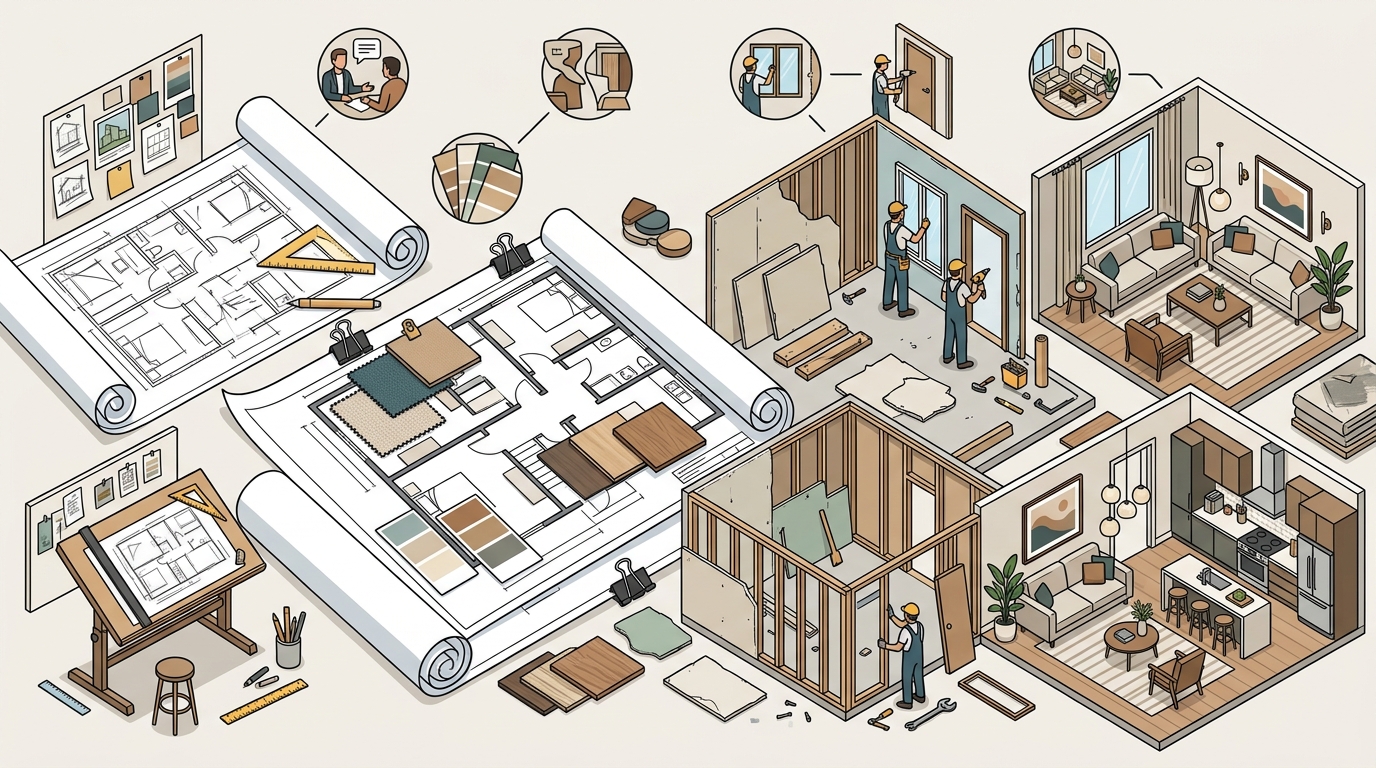
Transforming a house into a home that feels both current and personal takes more than picking trendy furniture. Modern residential interior design is a structured, multi-phase process that balances aesthetics with functionality, guiding homeowners from initial vision to final reveal. Whether you are planning a full home renovation or refreshing a single room, understanding each step keeps your project on budget, on schedule, and true to your style. Below, we break down the essential stages so you can approach your next project with confidence and clarity.
Step 1: Initial Consultation and Goal Setting
Every successful design project begins with a conversation. An initial consultation is a discovery meeting where the designer learns about your lifestyle, preferences, budget, and timeline. At Julieta Alvarez Interiors, this first meeting establishes the creative direction for everything that follows.
During this phase, expect to discuss must-haves, deal-breakers, and functional requirements. According to the Interior Design Institute, the consultation lays the groundwork by understanding the client's needs, preferences, and functional requirements. A thorough briefing at this stage prevents costly changes later.
Step 2: Concept Development and Mood Boarding
Concept development is the phase where ideas take visual form through mood boards, sketches, and color palettes. Your designer translates your goals into a cohesive aesthetic direction that guides every subsequent decision.
Modern residential design often blends clean lines with warm textures. For example, a warm transitional kitchen might pair sleek cabinetry with natural wood accents. Presenting two or three concept options allows you to refine the vision before committing to detailed plans.
Step 3: Space Planning and Floor Plans
Space planning is the strategic arrangement of furniture, fixtures, and circulation paths within a room to maximize both comfort and flow. This step turns abstract concepts into measurable layouts.
Professional designers use scaled floor plans and, increasingly, 3D renderings to test arrangements before any furniture is ordered. Good space planning considers traffic patterns, natural light, and how each zone will be used daily. If you are redesigning a living room or an eclectic family room, the floor plan is where functionality meets personality.
Step 4: Material, Finish, and Color Selection
Once the layout is locked, attention shifts to surfaces. Material selection involves choosing flooring, countertops, wall treatments, tile, and hardware that align with the approved concept. Color consultation is a specialized service where a designer recommends palettes that unify a home's rooms and lighting conditions.
Balancing Trends and Timelessness
Modern design favors a neutral backbone accented with bolder choices in removable elements like pillows, art, and rugs. This approach lets you update your look without a full renovation.
Coordinating with Contractors
Detailed material specifications are shared with contractors to ensure accurate ordering and installation. Misaligned specs are one of the top causes of project delays, so precision here saves time and money.
Step 5: Procurement and FF&E Sourcing
FF&E stands for Furniture, Fixtures, and Equipment. Procurement is the process of sourcing, ordering, and tracking every item needed for the project. Lead times for custom furniture can range from 8 to 16 weeks, so early ordering is critical.
Designers leverage trade-only vendors and showrooms to access pieces that are not available to the public. At Julieta Alvarez Interiors, sourcing includes furnishings, art, and accessories selected to reflect each client's personality. Reviewing a design portfolio is a great way to see how sourcing decisions come together in finished rooms.
Step 6: Construction, Installation, and Reveal
Implementation is the most tangible phase. If your project involves structural changes, a kitchen renovation or bathroom remodel, construction comes first. The designer coordinates with contractors, oversees progress, and resolves issues on-site.
Installation Day
After construction wraps, furnishings, lighting, and accessories are delivered and placed according to the design plan. Professional staging and final styling bring the room to life. This is the reveal moment when months of planning become a lived experience.
Post-Project Walkthrough
A quality designer schedules a walkthrough to verify every detail and address any remaining punch-list items. This follow-up ensures long-term satisfaction.
Design Phase Comparison Table
| Phase | Typical Duration | Key Deliverables | Who Is Involved |
|---|---|---|---|
| Consultation | 1-2 weeks | Project brief, budget outline | Designer + Client |
| Concept Development | 2-4 weeks | Mood boards, color palette | Designer |
| Space Planning | 2-3 weeks | Floor plans, 3D renders | Designer |
| Material Selection | 2-4 weeks | Finish schedule, samples | Designer + Client |
| Procurement | 8-16 weeks | Purchase orders, tracking log | Designer + Vendors |
| Installation & Reveal | 1-4 weeks | Styled space, punch list | Designer + Contractors |
Key Takeaways
- Start every project with a thorough consultation that covers lifestyle, budget, and timeline.
- Concept development through mood boards aligns the designer and homeowner before money is spent on materials.
- Space planning ensures that rooms function well, not just look good.
- Material selection should balance on-trend choices with timeless foundations.
- Procurement lead times of 8 to 16 weeks mean early ordering is essential.
- A professional designer coordinates contractors, vendors, and logistics so the homeowner does not have to.
- A post-project walkthrough guarantees every detail meets the approved design.
Frequently Asked Questions
How long does a full residential interior design project take?
Most whole-home projects take between four and nine months from consultation to reveal, depending on scope and whether construction is involved.
What is the difference between an interior designer and an interior decorator?
An interior designer handles spatial planning, construction documents, and code compliance in addition to aesthetics. An interior decorator focuses primarily on surface-level styling such as color, accessories, and soft furnishings.
How much does modern interior design cost?
Costs vary widely based on location and scope. In the tri-state area, professional design fees can range from a flat project rate to an hourly rate of $150 to $350, plus the cost of furnishings and construction.
Do I need an interior designer for a single-room makeover?
A designer adds value even for a single room by optimizing layout, sourcing trade-only pieces, and preventing costly mistakes. Julieta Alvarez Interiors offers single-room makeovers alongside whole-home projects.
What should I prepare before my first design consultation?
Gather inspiration images, set a realistic budget range, and list your functional priorities. The more detail you provide, the more personalized the design will be.
Can a designer work with my existing furniture?
Yes. Many designers incorporate existing pieces to save budget and preserve sentimental items while layering in new elements for a refreshed look.
What areas does Julieta Alvarez Interiors serve?
The firm serves homeowners and businesses across New Jersey, including Montclair, Short Hills, and Ridgewood, as well as New York City, Westchester, and Connecticut.
Ready to Start Your Modern Interior Design Project?
Whether you are envisioning a sleek kitchen, a cozy living room, or a complete home transformation, the right process makes all the difference. Contact Julieta Alvarez Interiors today to schedule your initial consultation and take the first step toward a home that truly reflects you.