

Transforming your home into a modern, cohesive living space takes more than picking paint colors and furniture. It requires a deliberate, step-by-step process that balances aesthetics with functionality. Whether you are renovating a single room or reimagining your entire home, understanding the phases of a residential interior design project helps you stay on budget, on schedule, and thrilled with the result. Below, we walk through each stage of implementing a modern residential interior design, from the first spark of inspiration to the final pillow placement.
Step 1: Define Your Vision with a Style Discovery
A style discovery is the foundational phase where you and your designer explore your specific taste, needs, and lifestyle. It goes beyond simple mood boards. A professional designer conducts an in-depth consultation to figure out what you truly love, from wall paint colors to specific furnishings and textures.
During this stage, expect to discuss your daily routines, entertaining habits, and the feeling you want each room to evoke. The goal is to build a design foundation rooted in your personality. According to the American Society of Interior Designers (ASID), projects that begin with a structured discovery phase experience fewer costly change orders later.
Step 2: Create an Accurate Floor Plan
A floor plan is a bird's-eye view of your design project that shows how every square foot will be utilized after completion. It defines crucial parameters such as traffic flow, furniture scale, and spatial relationships between rooms.
Your designer will take precise room measurements and draft a layout that optimizes space. This step is especially important in tri-state area homes, where urban layouts in places like Hoboken demand creative space-saving solutions. A well-crafted floor plan provides total clarity on the accessories and furnishings that can fit your space.
Step 3: Select a Cohesive Color Palette
Color consultation is the process of choosing wall colors, accent tones, and finish hues that complement your furniture, architecture, and natural light. Colors can make or break the overall appearance and mood of your space, so professional guidance pays dividends.
A skilled color consultant in Montclair, NJ will suggest palettes that account for the amount of light each room receives, the architectural era of your home, and your personal preferences. Modern residential palettes in 2025-2026 lean toward warm neutrals, earthy greens, and rich navy tones, according to Benjamin Moore's annual color trend reports.
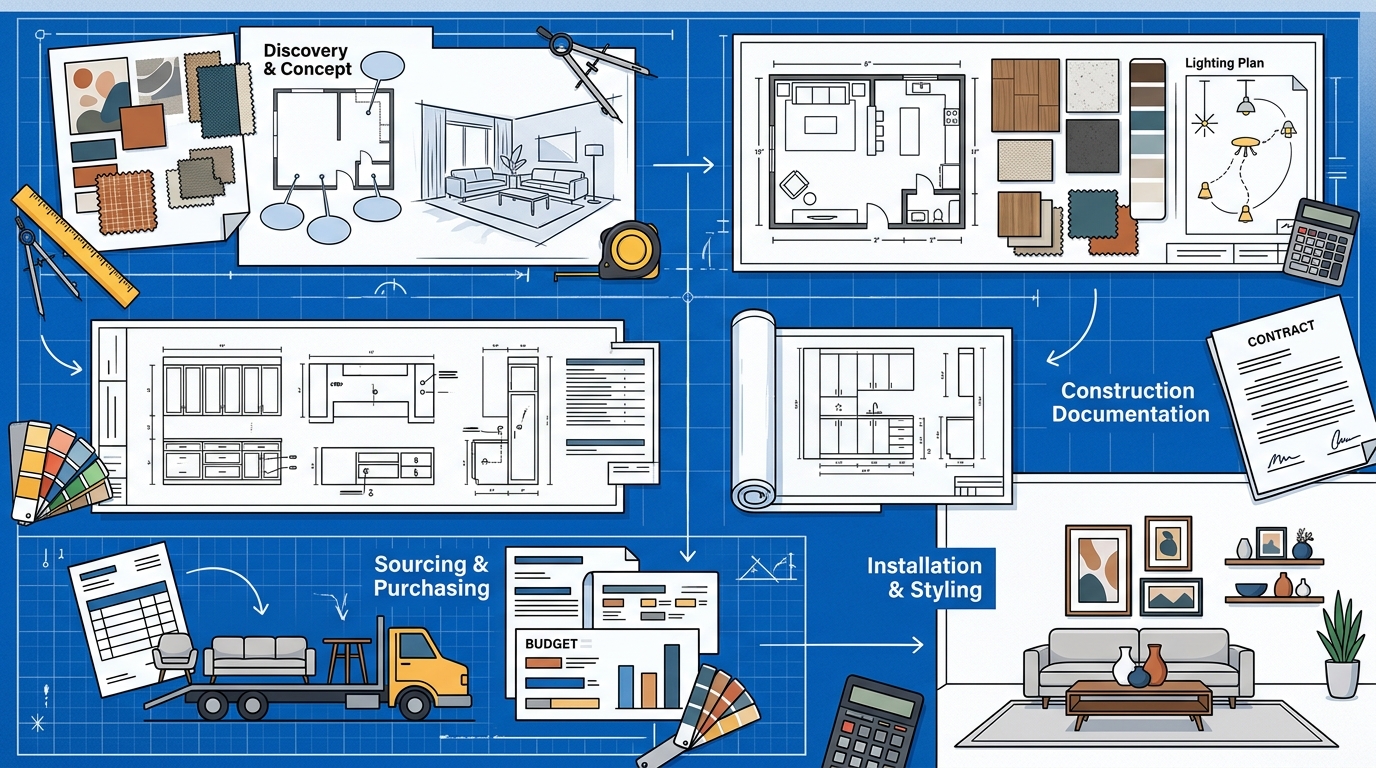
Step 4: Source Furnishings, Art, and Accessories
Sourcing is the phase where your designer selects every item that enters your home, from large sectionals down to throw pillows. A full-service firm sources from trade-only vendors to offer quality and pricing that retail shoppers cannot access.
Look for a designer who blends new and old pieces, different textures, and wood and metal finishes to create a look that is chic and modern yet warm. Review a firm's interior design portfolio to confirm their sourcing range matches your aesthetic. Custom-made furniture, including built-in cabinetry and millwork, can also be commissioned during this phase.
Trade-Only vs. Retail Sourcing
Trade-only vendors typically offer 20-40% savings over retail because designers buy at wholesale cost. They also provide access to exclusive fabrics, hardware, and furniture lines unavailable in showrooms. This is one of the most tangible financial benefits of hiring a professional.
Step 5: Prioritize Kitchen and Bathroom Renovations
The kitchen and bathroom are the most used rooms in your home and they must be properly functional and comfortable. Modern kitchen design often includes open layouts, integrated appliances, and statement islands. Bathroom renovations focus on spa-like finishes, frameless glass, and efficient storage.
A firm experienced in kitchen renovation in Montclair, NJ will compile the best surface materials, finishes, fixtures, window treatments, and millwork. According to the National Association of Realtors, kitchen and bathroom upgrades consistently recover 60-80% of their cost at resale, making them the highest-ROI interior projects.
Step 6: Manage Execution and Installation
Execution is the phase where the design plan becomes reality. Your designer should coordinate with architects, contractors, and subcontractors to keep the project on schedule. Oversight during this step covers product deliveries, quality checks, and final installations.
A reputable full home renovation team will give you an estimated timeline and stick to it. Key tasks during execution include millwork installation, paint application, furniture delivery staging, and final accessory styling. Consistent communication between you and your designer prevents surprises.
DIY vs. Professional Interior Design
| Factor | DIY Approach | Professional Designer |
|---|---|---|
| Cost Control | Risk of costly mistakes and re-purchases | Budget managed from start; trade pricing saves 20-40% |
| Timeline | Often delayed due to decision fatigue | Structured schedule with clear milestones |
| Access to Trade Resources | Retail only | Exclusive trade vendors, custom fabrication |
| Design Cohesion | Room-by-room; may lack flow | Whole-home vision ensures rooms blend seamlessly |
| Resale Value | Variable | Professionally designed homes command higher offers |
Key Takeaways
- Start every project with a structured style discovery to align your designer with your vision.
- An accurate floor plan prevents expensive spatial mistakes and ensures furniture fits perfectly.
- Professional color consultation accounts for light, architecture, and personal taste.
- Trade-only sourcing can save 20-40% compared to retail and unlocks exclusive product lines.
- Kitchen and bathroom renovations offer the highest ROI among interior projects.
- Coordinated execution with architects and contractors keeps timelines and budgets intact.
- Hiring a full-service designer streamlines the entire process from inspiration to installation.
Frequently Asked Questions
What is the first step in modern residential interior design?
The first step is a style discovery session where the designer explores your taste, lifestyle, and goals. This in-depth consultation ensures the entire project reflects your personality and needs.
How long does a full home interior design project take?
Timelines vary by scope, but a full home renovation typically takes three to nine months. Smaller single-room makeovers can be completed in four to eight weeks with a professional team.
How much does hiring an interior designer cost?
Costs depend on the scope and location, but most designers work on a flat fee, hourly rate, or percentage of project spend. Many firms, including those in New Jersey, offer flexible budget options so style has no budget limit.
Do I need a floor plan before choosing furniture?
Yes. A floor plan defines spatial parameters and ensures each piece of furniture fits proportionally. Skipping this step often leads to returns and wasted spending.
Can I keep my existing furniture during a redesign?
Absolutely. A skilled designer can work with your existing decor and furnishings to renovate the space with enhanced practicality, efficiency, and appeal.
What rooms should I renovate first for the best ROI?
Kitchens and bathrooms consistently deliver the highest return on investment, recovering 60-80% of costs at resale according to industry data.
What is a color consultation?
A color consultation is a professional service where a designer recommends wall colors and accent tones that complement your furniture, architecture, and natural light conditions.
How do I choose the right interior designer?
Review portfolios, read client reviews, and schedule a discovery call. Look for a designer with experience in your area and a style that resonates with your vision.
Ready to Transform Your Home?
If you are ready to bring modern design into your home, the team at Julieta Alvarez Interiors can guide you from concept to installation. Schedule your free consultation today and take the first step toward a space that truly reflects who you are.