
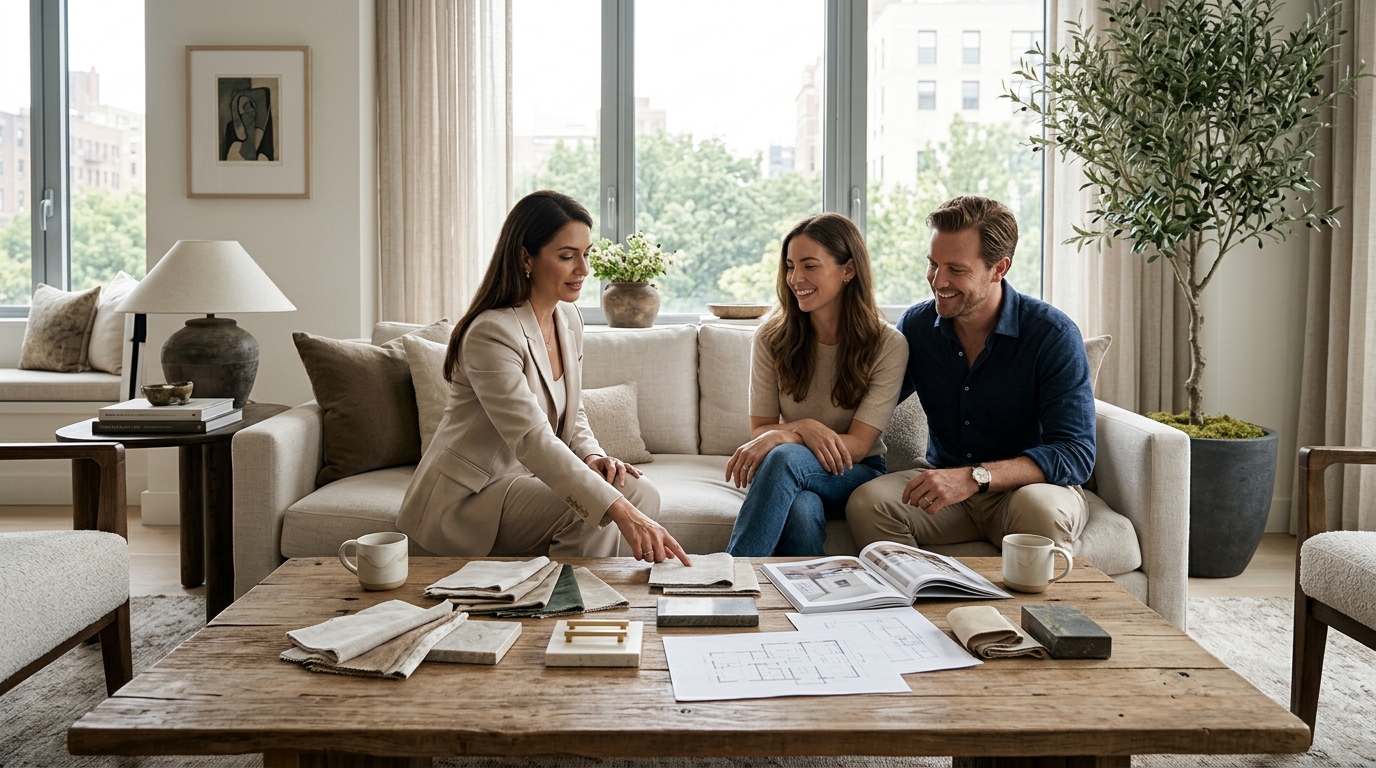
Transforming a home into a modern, cohesive living space takes more than picking a paint color and ordering a sofa. It requires a structured process that balances aesthetics, functionality, and personal style from the very first conversation through final installation. Whether you are renovating a single room or redesigning an entire house, understanding each step of the interior design process helps you stay on budget, on schedule, and genuinely excited about the result. Below, we break down the key stages so you can approach your next project with confidence.
Step 1: Discovery and Style Consultation
Every successful residential design project begins with a thorough discovery phase. A style consultation is the initial meeting where a designer learns about your lifestyle, preferences, budget, and timeline. At Julieta Alvarez Interiors, this stage involves an in-depth "style discovery" that uncovers what you truly love, from wall colors to specific furnishings.
According to the QC Design School, most professional designers follow seven key stages that start with consultation and end with final styling. The discovery step sets the creative direction for everything that follows.
Step 2: Space Planning and Floor Plans
A floor plan is a bird's-eye-view layout that defines how every square foot of your home will function after the redesign. Accurate measurements, traffic flow analysis, and furniture placement all happen during this stage.
The team at Julieta Alvarez Interiors develops precise floor plans after assessing room measurements, your budget, choices, and taste. Getting the layout right early prevents costly changes later and ensures rooms feel spacious and logical.
Why Flow Matters
Modern residential design prioritizes open, connected spaces. Each room should transition smoothly into the next, creating a sense of continuity throughout the home. Designers often use tools like AutoCAD or SketchUp to test arrangements digitally before any physical changes begin.
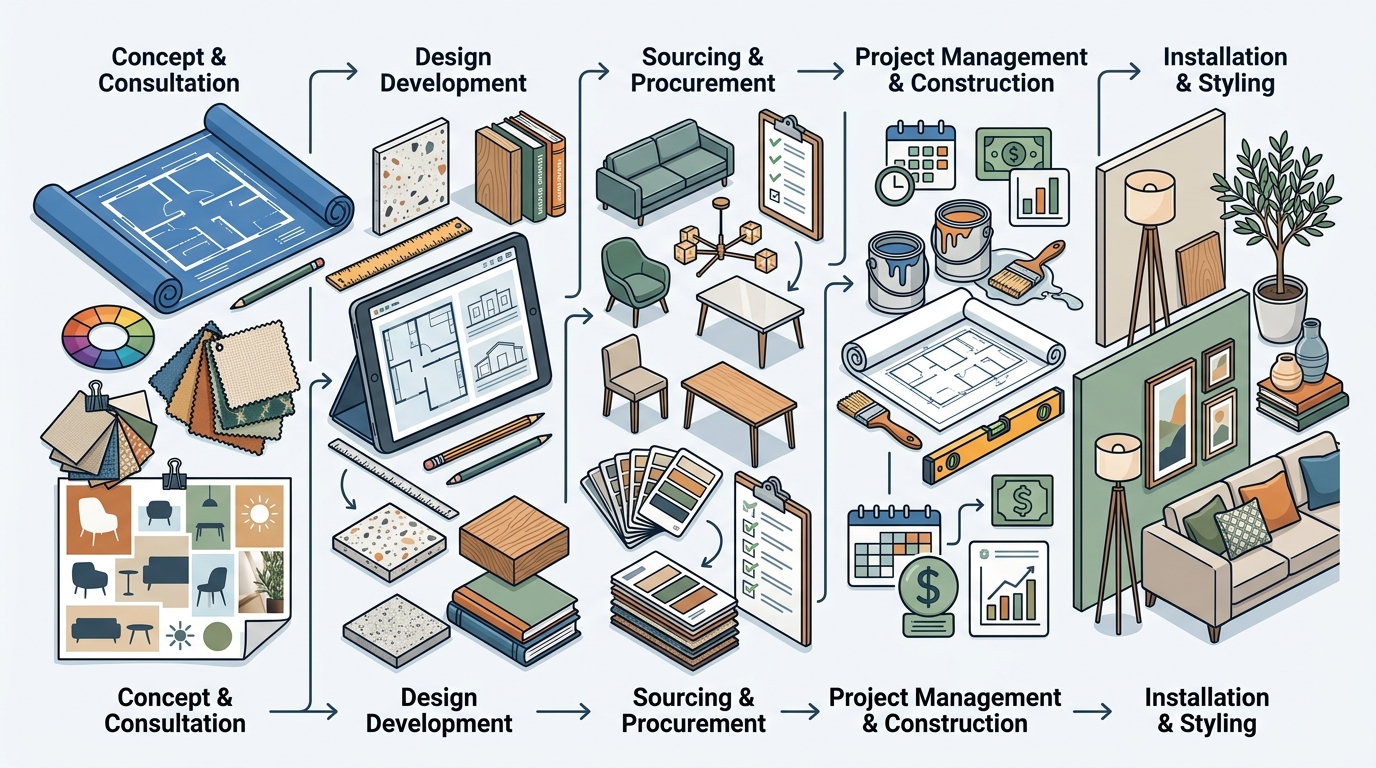
Step 3: Concept Development and Mood Boards
A mood board is a visual collage of colors, textures, materials, and furniture styles that communicates the overall direction of a design project. Your designer takes the insights gathered during discovery and translates them into tangible visual references.
This phase typically includes color palettes, fabric samples, and rough sketches. At this point, you will see how different elements work together before a single purchase is made. Review the eclectic living room project in Montclair for an example of how concept blending looks in practice.
Step 4: Material and Color Selection
Material selection considers aesthetic appeal, durability, and maintenance requirements. In 2025 and 2026, textured walls using limewash and decorative plaster are standout trends, as noted by Craft'n Build. Pairing matte wall finishes with gloss accent surfaces creates a layered, designer feel.
Color choices can make or break an interior. A specialized color consultation ensures that wall colors complement your furniture, architecture, and the natural light each room receives.
Step 5: Sourcing Furnishings, Art, and Accessories
Once materials and palettes are locked in, it is time to source the items that bring the design to life. This includes furniture, rugs, throw pillows, art, lighting, window treatments, and custom millwork. A full-service firm works with trade-only vendors to access pieces not available to the general public.
Julieta Alvarez Interiors sources from leading furniture manufacturers and also provides custom-made options including wall-fixing cabinets and modular kitchen elements. Depending on your budget, sourcing can range from high-end trade showrooms to curated vintage finds.
Blending Old and New
A hallmark of modern residential design is mixing vintage and contemporary pieces. This approach adds character and avoids the "catalog showroom" look that many homeowners want to avoid.
Step 6: Implementation and Project Management
Implementation is the phase where drawings become reality. It involves coordinating contractors, managing deliveries, and overseeing installations. A designer works alongside your architect and contractors to keep the project on schedule and within budget.
Strong project management prevents expensive mistakes. From measuring and product ordering to overseeing installations, firms like Julieta Alvarez Interiors handle full home renovations with a keen eye on quality and timelines.
Step 7: Final Styling and Reveal
The final phase focuses on the details that make a house feel like a home. Accessories, textiles, greenery, and personal items add warmth and personality. This is when art is hung, shelves are styled, and every cushion lands in exactly the right spot.
For projects across the tri-state area, from Hoboken condos to Scarsdale whole-home renovations, the reveal is the moment when months of planning pay off in a space that feels both polished and personal.
Design Process Comparison Table
| Stage | Primary Activities | Typical Duration |
|---|---|---|
| Discovery / Consultation | Lifestyle interview, budget setting, style quiz | 1 - 2 weeks |
| Space Planning | Measurements, floor plans, traffic flow analysis | 1 - 3 weeks |
| Concept Development | Mood boards, color palettes, sketches | 2 - 4 weeks |
| Material & Color Selection | Finishes, paint, hardware, surface materials | 2 - 4 weeks |
| Sourcing | Furniture, art, rugs, lighting, custom pieces | 4 - 12 weeks |
| Implementation | Contractor coordination, deliveries, installations | 4 - 16 weeks |
| Final Styling & Reveal | Accessory placement, art hanging, walk-through | 1 - 2 weeks |
Key Takeaways
- A structured, step-by-step design process keeps residential projects organized, on budget, and on schedule.
- Discovery is the foundation: honest communication about lifestyle, taste, and budget shapes every decision that follows.
- Floor plans should be finalized before any purchasing begins to avoid costly layout changes mid-project.
- Material and color selection in 2025-2026 trends toward textured finishes, warm earth tones, and layered surfaces.
- Sourcing from trade-only vendors gives you access to higher-quality pieces at better price points.
- Project management during implementation is what separates a smooth renovation from a stressful one.
- Final styling transforms a finished space into a home that reflects your unique personality.
Frequently Asked Questions
How long does a full residential interior design project take?
Timelines vary based on scope. Small decorating projects can wrap up in a few weeks, while large renovations may take several months from initial consultation to final reveal.
What is a style discovery in interior design?
A style discovery is an in-depth exploration of your preferences, needs, and aesthetic goals. It helps the designer understand what you love and builds the creative brief for the entire project.
Do I need a floor plan before buying furniture?
Yes. A professional floor plan ensures that every piece fits the space, maintains proper traffic flow, and contributes to the overall design vision. Buying furniture without one often leads to returns and wasted money.
How much does it cost to hire an interior designer in New Jersey?
Costs depend on the scope, firm, and fee structure. Many designers offer flexible pricing, and firms like Julieta Alvarez Interiors work with a range of budgets while still delivering high-quality results.
What is the difference between an interior designer and a decorator?
An interior designer is a trained professional who handles space planning, construction coordination, and full project management. A decorator typically focuses on surface-level aesthetics like furnishings and color without structural changes.
Can I hire a designer for just one room?
Absolutely. Single-room makeovers are a popular service. Whether it is a living room refresh or a kitchen renovation, many firms offer room-by-room packages.
What design styles are trending in 2025 and 2026?
Popular styles include minimalism, Japandi, maximalism, and vintage revival. Many designers blend multiple influences for a personalized, layered look rather than committing to a single aesthetic.
How do I prepare for my first design consultation?
Gather inspiration images, make a list of must-haves versus nice-to-haves, set a realistic budget range, and think about how you use each room daily. The more you share, the better your designer can tailor the plan.
Ready to Start Your Modern Interior Design Project?
Whether you are planning a whole-home transformation or a single-room refresh, having a professional guide you through each step makes all the difference. Contact Julieta Alvarez Interiors today to schedule your complimentary style consultation and take the first step toward the home you have always envisioned.