
Every homeowner hits a point where something in a room just feels off. Maybe the layout is awkward, the lighting falls flat, or the colors clash with your furniture. These are not signs of bad taste; they are common residential interior design problems that professionals solve every day. The good news is that most of these issues have straightforward fixes once you know what to look for. Below, we break down the most frequent design challenges and share practical solutions drawn from over a decade of hands-on experience at Julieta Alvarez Interiors.
1. Awkward Room Layouts That Kill Flow
A floor plan is the blueprint that dictates how people move through a space. When furniture blocks natural pathways or a room lacks a clear focal point, the entire space feels disjointed. This is one of the most common complaints homeowners bring to a designer.
How to Fix It
Start by identifying your room's focal point, whether it is a fireplace, a large window, or an accent wall. Arrange seating to face that anchor. Leave at least 30 to 36 inches for walkways between furniture groupings. In open-concept homes, use area rugs and lighting to define distinct zones for dining, lounging, and working.
If you are renovating a full home, a professional whole-home renovation plan ensures every room connects logically and supports daily life.
2. Making Small Spaces Feel Larger
Small-space design is the practice of maximizing visual and functional impact in rooms with limited square footage. In tri-state homes, particularly Hoboken apartments and older New Jersey colonials, tight rooms are the norm rather than the exception.
Visual Tricks That Work
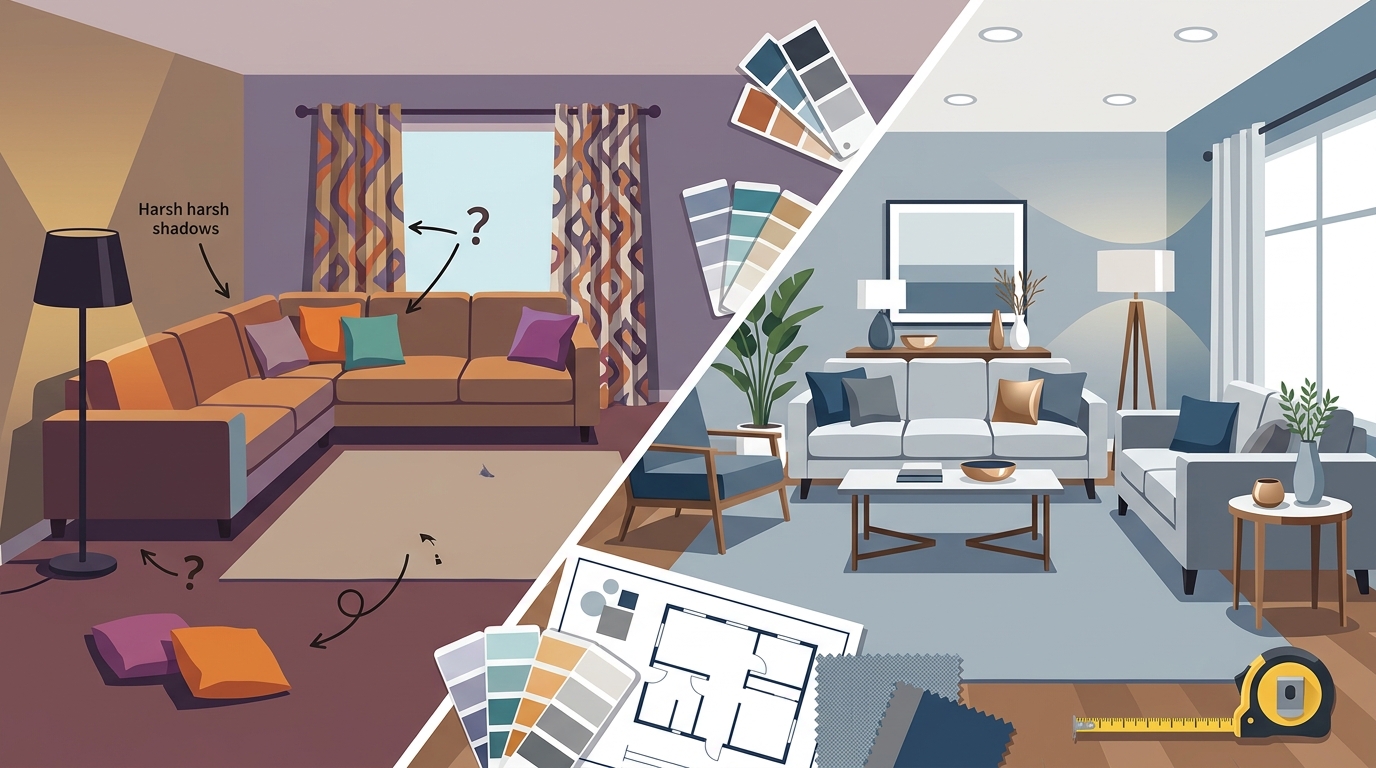
Light or neutral wall colors reflect more light and make walls appear to recede. Mirrors placed opposite windows amplify natural light and create a sense of depth. Choosing low-profile, multi-functional furniture prevents visual clutter while still meeting storage needs.
Furniture Scaling
The dimensions of your furniture should relate to the size of your room. Trying to cram too many furnishings into a small space easily overwhelms it. Select a handful of quality, appropriately scaled pieces that fill the area while leaving open floor space visible.
3. Poor or Unbalanced Lighting
Lighting design is the strategic layering of ambient, task, and accent light sources to create mood and functionality. Even a beautifully furnished room will feel flat or uninviting under a single overhead fixture.
The Layered Approach
Combine three types of lighting in every room: ambient (ceiling fixtures or recessed cans), task (reading lamps, under-cabinet strips), and accent (picture lights, sconces). Avoid relying on a singular light source. Instead, distribute light from different directions and heights to add depth and warmth.
Mirrors are also essential for reflecting both natural and artificial light throughout a space. For living rooms that need personality and warmth, see how layered lighting transforms our Montclair living room projects.
4. Color Palette Mistakes
A color palette is a curated set of hues used throughout a space to create visual harmony. One of the most frequent errors homeowners make is painting walls first and then trying to match furnishings and fabrics afterward. This sequence often results in clashing tones and a disjointed feel.
The Right Approach
Choose your largest textile or upholstery piece first, then pull wall colors from that anchor. Work within a color family of three to five coordinating shades. When rooms flow into one another, carry at least one shared tone through each space to maintain cohesion.
According to the Pantone Color Institute, color influences up to 90% of snap judgments about a space. A dedicated color consultation can prevent costly repainting down the road.
5. Designing on a Tight Budget
Budget constraints often limit creative freedom, but they can also inspire innovative solutions. The key is prioritizing the elements that have the highest visual and functional impact first.
Budget-Smart Strategies
| Strategy | Estimated Savings | Impact Level |
|---|---|---|
| Repurpose existing furniture with new upholstery or paint | 40-60% vs. buying new | High |
| Replace hardware (knobs, pulls, faucets) instead of full cabinetry | Up to 80% | Medium-High |
| Use paint to mimic expensive materials (marble, wood grain) | 70-90% | Medium |
| Shop vintage or consignment for statement pieces | 50-75% | High |
| Focus renovation spend on kitchen and bathrooms for ROI | Varies | Very High |
For a real-world example of a high-impact kitchen transformation, browse our Short Hills kitchen renovation project, which balanced premium finishes with thoughtful material sourcing.
6. Lack of Storage and Clutter Buildup
Insufficient storage is the gap between a home's built-in capacity and the belongings its residents actually own. New construction and older homes alike frequently fall short. Without smart solutions, clutter accumulates and rooms feel smaller than they are.
Solutions That Work
Floating shelves add display and storage without consuming floor space. Built-in cabinetry tailored to your exact dimensions can justify every square foot. Multi-functional furniture, like ottomans with hidden compartments or beds with built-in drawers, keeps everyday items out of sight.
In our Montclair eclectic family room project, blending vintage storage pieces with modern built-ins created ample room for a growing family without sacrificing style.
Key Takeaways
- Most interior design problems stem from layout, lighting, color, scale, storage, or budget issues.
- Always start with a floor plan and focal point before selecting furniture.
- Layer three types of lighting (ambient, task, accent) in every room.
- Choose textiles and upholstery before committing to wall paint colors.
- Repurposing and refinishing existing pieces can save 40 to 60% compared to buying new.
- Built-in and multi-functional furniture solves storage problems in any size home.
- Working with a professional designer prevents costly mistakes and saves time in the long run.
Frequently Asked Questions
What is the most common interior design mistake homeowners make?
The most common mistake is choosing paint colors before selecting furniture and textiles. This leads to mismatched tones and an incoherent room. Start with your largest fabric or upholstery piece and build your palette from there.
How can I make a small room look bigger without renovating?
Use light, neutral wall colors, add mirrors opposite windows, choose low-profile furniture, and keep floor space visible. These visual strategies create the illusion of a larger room without any construction.
How do I fix bad lighting in my home?
Replace single overhead fixtures with a layered lighting plan. Combine ambient ceiling lights, task lamps for work areas, and accent lighting for art or architectural features. Use dimmers for flexible mood control.
Is hiring an interior designer worth it on a tight budget?
Yes. A designer helps you avoid expensive mistakes, sources trade-priced materials, and prioritizes spending where it matters most. Many firms, including Julieta Alvarez Interiors, offer flexible packages that adapt to a range of budgets.
How do I choose a color palette that flows through my whole house?
Select one neutral base tone and two to three accent colors. Carry at least one shared hue from room to room. Use varying intensities of your palette to create contrast without clashing.
What should I renovate first for the best return on investment?
Kitchens and bathrooms consistently deliver the highest ROI according to the National Association of Realtors. Focus your renovation budget on these high-impact areas first.
How do I add storage to a home that has none?
Install floating shelves, invest in custom built-ins, and choose furniture with hidden storage compartments. Even small additions like over-door organizers and drawer dividers make a noticeable difference.
Can I mix different design styles in one home?
Absolutely. Blending old and new elements creates personality and visual interest. The key is maintaining a consistent color palette and repeating at least one material or texture across rooms to tie everything together.
Ready to Transform Your Space?
Whether you are tackling one stubborn room or planning a full renovation, having a professional eye makes all the difference. Julieta Alvarez Interiors serves homeowners across New Jersey, New York City, Westchester, and Connecticut with a flexible, client-first approach. Schedule your consultation today and let us turn your design challenges into a home you love.