
Every homeowner encounters design challenges, whether it is an awkward layout, a room that feels too small, or a color scheme that just does not come together. The good news is that most residential interior design problems have practical, proven solutions. At Julieta Alvarez Interiors, we have spent over a decade helping homeowners across New Jersey, New York, and Connecticut transform frustrating spaces into functional, beautiful rooms. In this guide, we walk through the most common issues we see and share actionable fixes you can apply today or tackle with a professional designer by your side.
Making Small Spaces Feel Larger
A small room is one of the most common residential interior design challenges. A small space is a room that feels cramped or visually compressed due to limited square footage or poor layout choices. Whether you live in a Hoboken apartment or a cozy colonial in Montclair, cramped rooms are manageable.
Use Light Colors and Reflective Surfaces
Light, neutral paint colors make walls recede visually. Pair them with glossy surfaces or large mirrors to bounce natural light around the room. According to Aertsen Design, your main focus should be to create visual illusions that make the space appear larger.
Choose Multi-Functional Furniture
Ottomans with hidden storage, nesting tables, and wall-mounted desks free up floor area. Every piece should earn its place in a small room.
Fixing Color Palette Mistakes
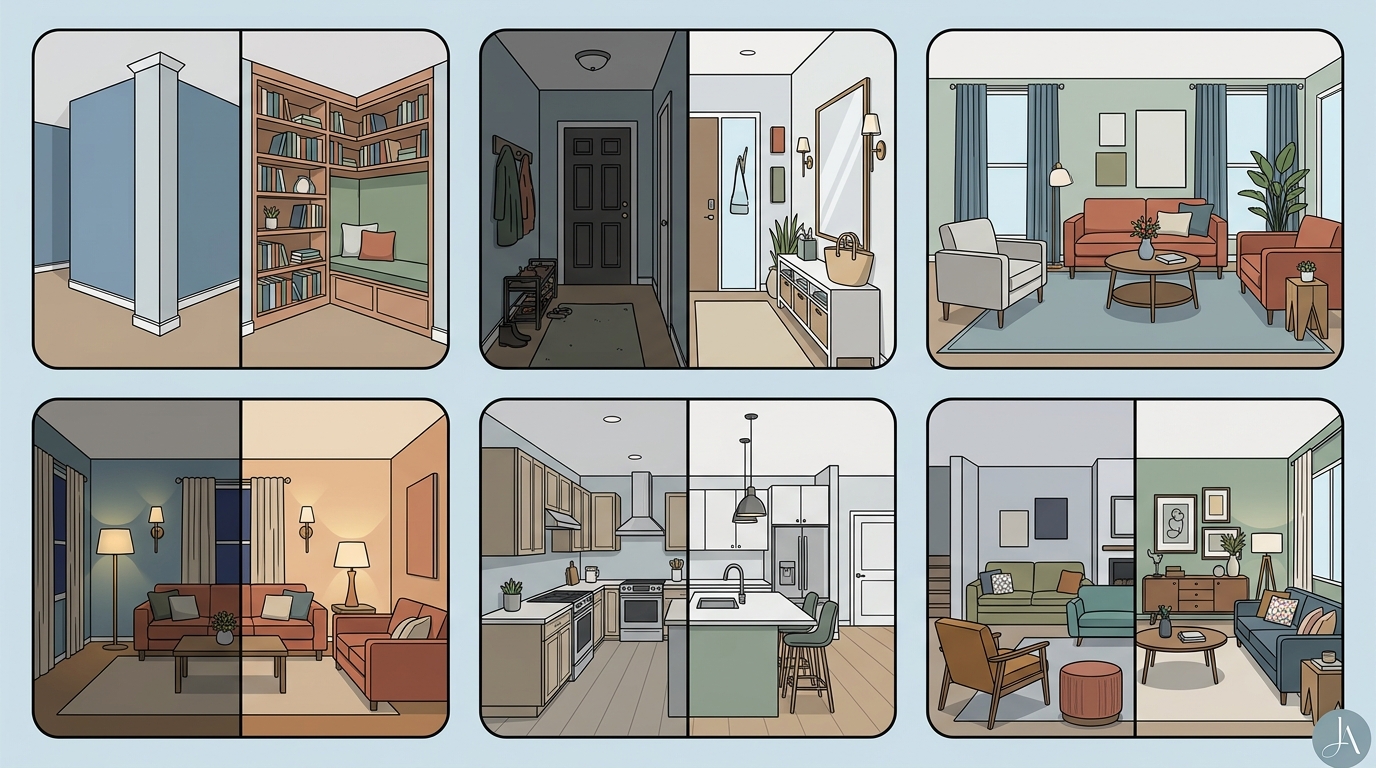
A color palette is the coordinated set of hues used across walls, furnishings, and accents in a space. Choosing the wrong one can make a room feel chaotic or flat. A common mistake is painting walls first and then trying to match furnishings afterward.
Start with a textile or artwork you love, pull three to five colors from it, and build your palette from there. Our eclectic Montclair living room project is a great example of a bold yet cohesive palette anchored by a single statement piece. When in doubt, use a neutral base and add color through accessories that are easy to swap seasonally.
Solving Poor Lighting
Lighting affects how every other design element reads in a space. Poor lighting is the single fastest way to undermine an otherwise well-designed room. As JD Elite Interiors notes, lighting is one of the most essential elements of interior design, especially when people intend to use the space for work.
Layer Your Light Sources
Combine ambient, task, and accent lighting. Avoid relying on a single overhead fixture. Use table lamps, sconces, and under-cabinet strips to create depth and warmth. Mirrors placed opposite windows amplify natural light without additional fixtures.
Getting Furniture Scale Right
Furniture scale is the relationship between the size of your furnishings and the dimensions of your room. Oversized sofas in small living rooms or tiny accent chairs in open-plan great rooms both create visual imbalance.
| Problem | Signs | Solution |
|---|---|---|
| Furniture too large | Tight walkways, blocked sightlines | Swap for low-profile, leggy pieces |
| Furniture too small | Room feels empty, seating looks lost | Add area rugs and group seating into zones |
| Mismatched heights | Uneven visual weight across room | Anchor with one statement piece, scale others to it |
Before purchasing, measure your room and map out a floor plan. Even a simple tape-on-the-floor outline helps you avoid costly mistakes.
Conquering Storage Shortages
Lack of storage is a universal pain point, particularly in older New Jersey homes and new-build condos alike. Floating shelves, built-in cabinetry, and multi-purpose furniture can reclaim square footage without making rooms feel cluttered. Our full home renovation in Montclair shows how custom built-ins turn wasted wall space into streamlined storage.
Think vertically: floor-to-ceiling shelving draws the eye upward and maximizes capacity. In kitchens, pull-out organizers and deep drawers outperform traditional cabinets for daily usability.
Updating Outdated Architectural Features
Older homes in areas like Glen Ridge and Short Hills often include charming but dated elements such as popcorn ceilings, dark wood paneling, or brass fixtures. Rather than ripping everything out, consider blending old with new. Painting dark paneling in a warm white can preserve character while modernizing the feel.
Where removal is possible, prioritize changes that deliver the biggest visual impact per dollar: replacing light fixtures, updating cabinet hardware, and refinishing floors.
Designing on a Budget
Budget constraints are the most cited barrier to good residential design. Repurposing existing furniture, prioritizing high-impact changes, and phasing a project over time are proven strategies. Paint is the single most cost-effective transformation tool available to homeowners. A fresh coat in a well-chosen color can redefine an entire room for a few hundred dollars.
Working with a designer actually helps you avoid expensive mistakes. At Julieta Alvarez Interiors, we tailor every project to the client's budget, whether that means a single kitchen renovation or a phased whole-home plan.
Key Takeaways
- Light colors, mirrors, and multi-functional furniture make small rooms feel spacious.
- Build your color palette from a single inspiration piece before painting walls.
- Layer three types of lighting (ambient, task, accent) in every room.
- Always measure furniture against your room dimensions before buying.
- Use vertical storage solutions like built-ins and floor-to-ceiling shelving.
- Blend dated architectural features with modern finishes instead of gutting them.
- A phased design plan lets you achieve professional results on any budget.
Frequently Asked Questions
What is the most common interior design mistake homeowners make?
Choosing furniture that is the wrong scale for the room. Oversized pieces crowd a space, while undersized items make it feel incomplete. Always start with accurate room measurements and a floor plan.
How can I make a small room look bigger without renovating?
Use light wall colors, add mirrors to reflect natural light, choose furniture with exposed legs, and declutter surfaces. These changes require zero construction.
Should I paint my walls before or after selecting furniture?
Select your furnishings and key textiles first, then choose a wall color that complements them. Painting first often leads to mismatched tones that are expensive to fix.
How do I fix a room that feels too dark?
Layer multiple light sources: overhead ambient lighting, task lamps for work areas, and accent lighting to highlight art or architecture. Avoid relying on a single ceiling fixture.
Is hiring an interior designer worth the cost?
Yes. A professional designer helps you avoid costly purchasing mistakes, manages vendor relationships, and delivers a cohesive result faster. Julieta Alvarez Interiors offers flexible engagement levels from color consultations to full-service design.
How do I update a dated home without losing its character?
Focus on surface-level changes first: paint dark wood paneling, swap hardware, and update light fixtures. Preserve original moldings and architectural details that add charm, and modernize everything around them.
What is the fastest way to refresh a room on a budget?
Paint the walls, replace throw pillows and lighting, and add a new area rug. These three changes can transform a room in a single weekend for under $500.
How do I create a cohesive look across an open floor plan?
Use a consistent color palette and repeat one or two materials (such as a wood tone and a metal finish) throughout the space. Define zones with area rugs and furniture groupings rather than walls.
Ready to Transform Your Home?
Whether you are tackling one stubborn room or reimagining your entire home, Julieta Alvarez Interiors brings over a decade of hands-on experience to every project. Schedule a consultation today and let us turn your design challenges into your favorite features.