
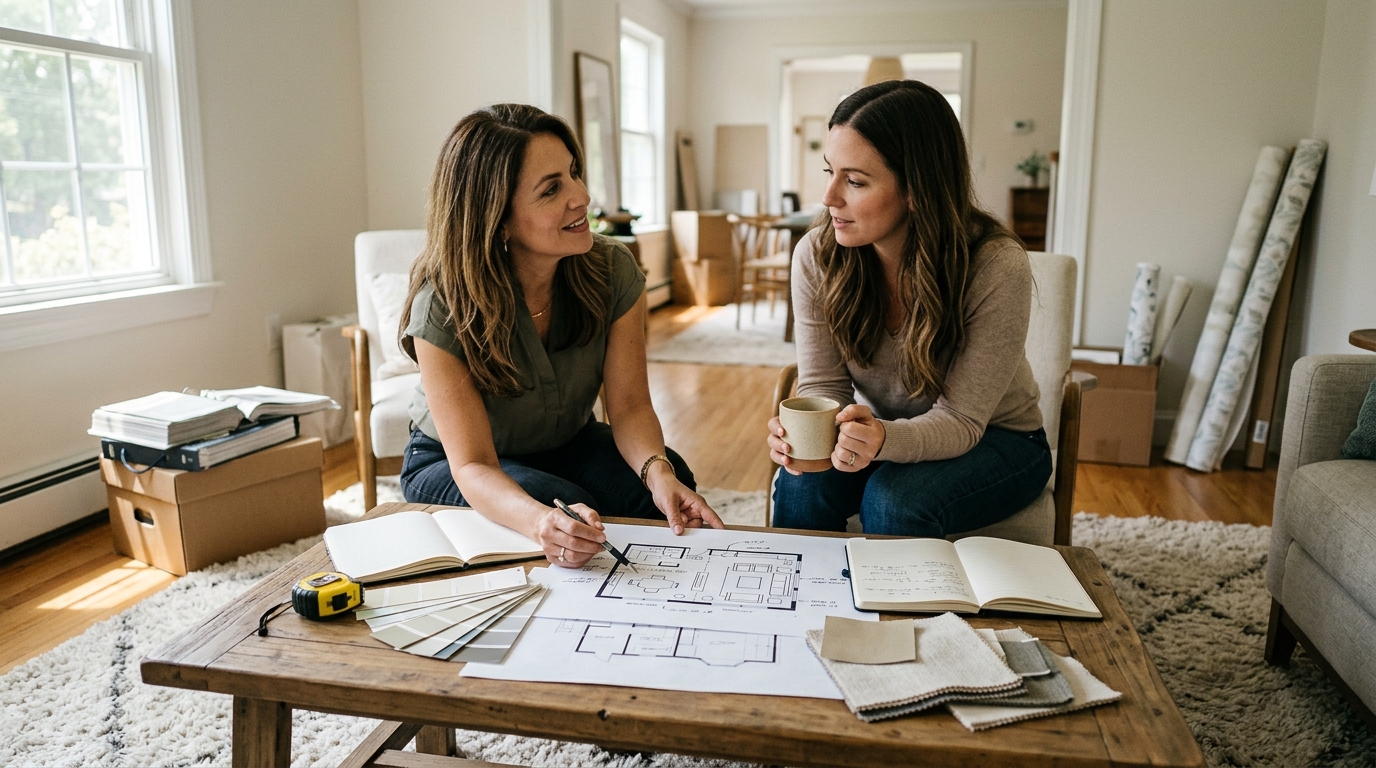
Every homeowner eventually encounters design challenges that make a space feel "off." Whether you are dealing with an awkward layout, clashing colors, poor lighting, or a tight budget, most residential interior design problems have practical, creative solutions. The key is knowing what to look for and when to call in a professional. In this guide, we walk through the most frequent issues homeowners face and provide actionable fixes you can start using today. At Julieta Alvarez Interiors, we have spent over a decade solving exactly these problems for clients across New Jersey, New York, and Connecticut.
1. Fixing Awkward Room Layouts
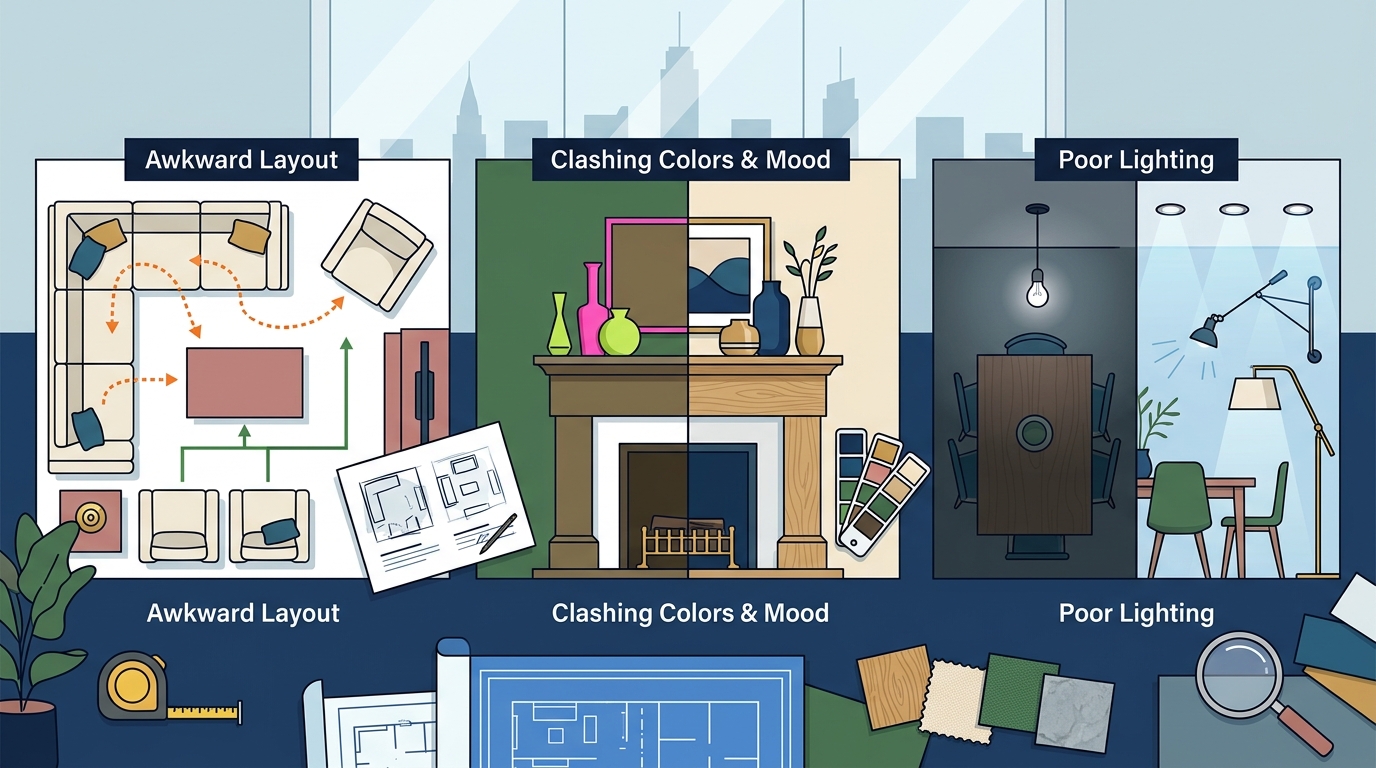
A floor plan is a bird's-eye view of your design project that shows exactly how a space will be utilized after completion. When a room feels uncomfortable, the layout is almost always the culprit. Furniture pushed against every wall creates a hollow center, while too many pieces crammed together blocks natural traffic flow.
Start With a Furniture Plan
Professional designers begin every residential project by creating a flawless furniture plan and determining the best layout for the home. An accurate floor plan defines crucial parameters and provides clarity on which furnishings will actually fit. Before purchasing anything, measure the room and sketch a scaled drawing.
Create Zones in Large Rooms
Large rooms can be deceptively tricky. Instead of one oversized seating area, break the space into multiple functional zones using area rugs, bookshelves, or console tables. This technique works especially well in open-concept homes common throughout Montclair and the surrounding tri-state area.
2. Making Small Spaces Feel Larger
A small space is any room where square footage limits your furniture and storage options. Tri-state homeowners in cities like Hoboken and Brooklyn know this challenge well. The good news: a few targeted adjustments can dramatically change perception.
Use Light Colors and Mirrors
Light or neutral wall colors make a room feel larger by reflecting more natural light. Mirrors amplify this effect by bouncing light across the space. Glossy surfaces and reflective finishes add extra depth. According to Planner 5D, proper lighting alone can make any room feel bigger, cozier, and more useful.
Choose Scaled Furniture
The dimensions of your furniture should relate to the size of your room. Low-profile, multifunctional pieces fill the area without overwhelming it. At Julieta Alvarez Interiors in Hoboken, we specialize in space planning even inside very limited interiors, using custom and space-saving furniture solutions.
3. Overcoming Color Selection Mistakes
Color selection is the process of choosing a cohesive palette of wall paints, fabrics, and finishes that set the mood for a room. Colors can make or break the entire appearance and ambiance of your space, yet it is one of the most common areas where homeowners go wrong.
Pick Fabrics Before Paint
A frequent mistake is painting walls first and then trying to match furnishings. Paint comes in thousands of shades, but fabric and furniture options are more limited. Start with the harder-to-find items like rugs and upholstery, then select complementary paint colors. Always test samples on your walls at different times of day, because light dramatically affects how colors look, as noted by interior design experts.
If you are unsure, a professional color consultation can save time and prevent costly repaints. Julieta Alvarez suggests wall colors that complement furniture, architecture, and the amount of natural light each room receives.
4. Solving Poor Lighting
Lighting is one of the most essential elements in interior design. The most common mistake homeowners make is relying on a single overhead fixture per room, which creates harsh shadows and uneven illumination.
Layer Your Light Sources
Good lighting uses multiple sources at different heights: table lamps, floor lamps, task lighting, and overhead fixtures working together. Avoid blocking windows with bulky furniture or heavy curtains. According to Flooring America, lighting plays an integral role in setting the mood and enhancing overall design.
5. Designing on a Tight Budget
Budget is consistently one of the top concerns for homeowners undertaking a redesign. Interior design fees have increased steadily since 2014, according to Statista data cited by JD Elite Interiors, but beautiful results are still achievable at every price point.
Repurpose and Refresh
Repainting cabinets, replacing hardware, reupholstering existing furniture, and swapping out light fixtures are all low-cost ways to refresh a room. At Julieta Alvarez Interiors, we follow the philosophy that "style has no budget" and source furnishings from a range of vendors depending on each client's financial plan. Explore our portfolio for inspiration at various investment levels.
6. Tackling a Lack of Storage
Insufficient storage is a silent design killer. Without smart solutions, clutter builds up and even a well-decorated room starts to feel chaotic. New-build homes are especially prone to this problem because they often lack built-in cabinetry.
Think Vertical and Multifunctional
Floating shelves, ottomans with hidden compartments, platform beds with drawers, and custom built-in cabinetry all maximize storage without sacrificing floor space. Our team at Julieta Alvarez Interiors provides custom millwork and modular solutions tailored to the exact dimensions of your space.
7. Problem-Solution Quick Reference
| Common Problem | Root Cause | Recommended Solution | DIY or Pro? |
|---|---|---|---|
| Awkward layout | No floor plan or traffic flow analysis | Create a scaled furniture plan with zones | Pro recommended |
| Room feels cramped | Oversized furniture, dark walls | Light colors, mirrors, scaled furniture | DIY possible |
| Clashing colors | Painting walls before selecting fabrics | Choose textiles first, then match paint | DIY or consult |
| Poor lighting | Single overhead fixture | Layer ambient, task, and accent lighting | DIY possible |
| Over budget | No spending plan upfront | Repurpose existing pieces; set priorities | Pro saves money |
| No storage | Lack of built-ins | Floating shelves, multifunctional furniture | DIY or pro |
| Disconnected style | Room-by-room decorating | Establish a cohesive palette for the whole home | Pro recommended |
Key Takeaways
- Always start with a detailed floor plan before buying any furniture.
- Light colors, mirrors, and layered lighting make small rooms feel dramatically larger.
- Select rugs and upholstery fabrics before choosing wall paint to avoid costly mismatches.
- Layer three types of lighting (ambient, task, accent) in every room.
- Repurposing existing furniture is one of the most budget-friendly design strategies available.
- Custom built-ins and multifunctional pieces solve storage challenges without wasting square footage.
- Hiring a professional designer can prevent expensive mistakes and streamline the entire process.
Frequently Asked Questions
What is the most common interior design mistake homeowners make?
Relying on a single overhead light source per room is one of the most frequent errors. Layering ambient, task, and accent lighting instantly improves any space.
How do I make a small room look bigger without renovating?
Use light or neutral wall colors, add mirrors to reflect light, choose low-profile furniture, and eliminate clutter. These changes require no structural work.
Should I paint my walls before or after choosing furniture?
Choose furniture and fabrics first. Paint comes in thousands of colors, but furniture options are more limited, so it is easier to match paint to your pieces rather than the reverse.
How much does it cost to hire an interior designer in New Jersey?
Costs vary widely depending on scope. Many firms, including Julieta Alvarez Interiors, offer flexible pricing structures and work with a range of budgets. Contact a designer for a personalized estimate.
Can an interior designer help me stay on budget?
Yes. A skilled designer identifies where to invest and where to save, prevents costly mistakes, and has access to trade-only pricing on furnishings and materials.
What is a color consultation?
A color consultation is a service where a professional evaluates your home's architecture, natural light, and existing furnishings to recommend a harmonious paint palette. Julieta Alvarez Interiors offers this as a standalone service.
How do I create a cohesive look across multiple rooms?
Establish a unified color palette and carry complementary materials throughout the home. Each room should mix smoothly into the next for a connected feel.
When should I hire a professional instead of doing it myself?
Consider hiring a pro for whole-home renovations, kitchen and bathroom remodels, or any project involving structural changes. Professionals bring floor planning expertise, vendor access, and project management skills that save time and money.
Ready to Transform Your Home?
If you are facing any of these common design challenges, you do not have to solve them alone. Contact Julieta Alvarez Interiors today at (917) 355-4414 to schedule a consultation. From single-room makeovers to full-home renovations across New Jersey, New York, and Connecticut, our team is ready to turn your vision into reality.