
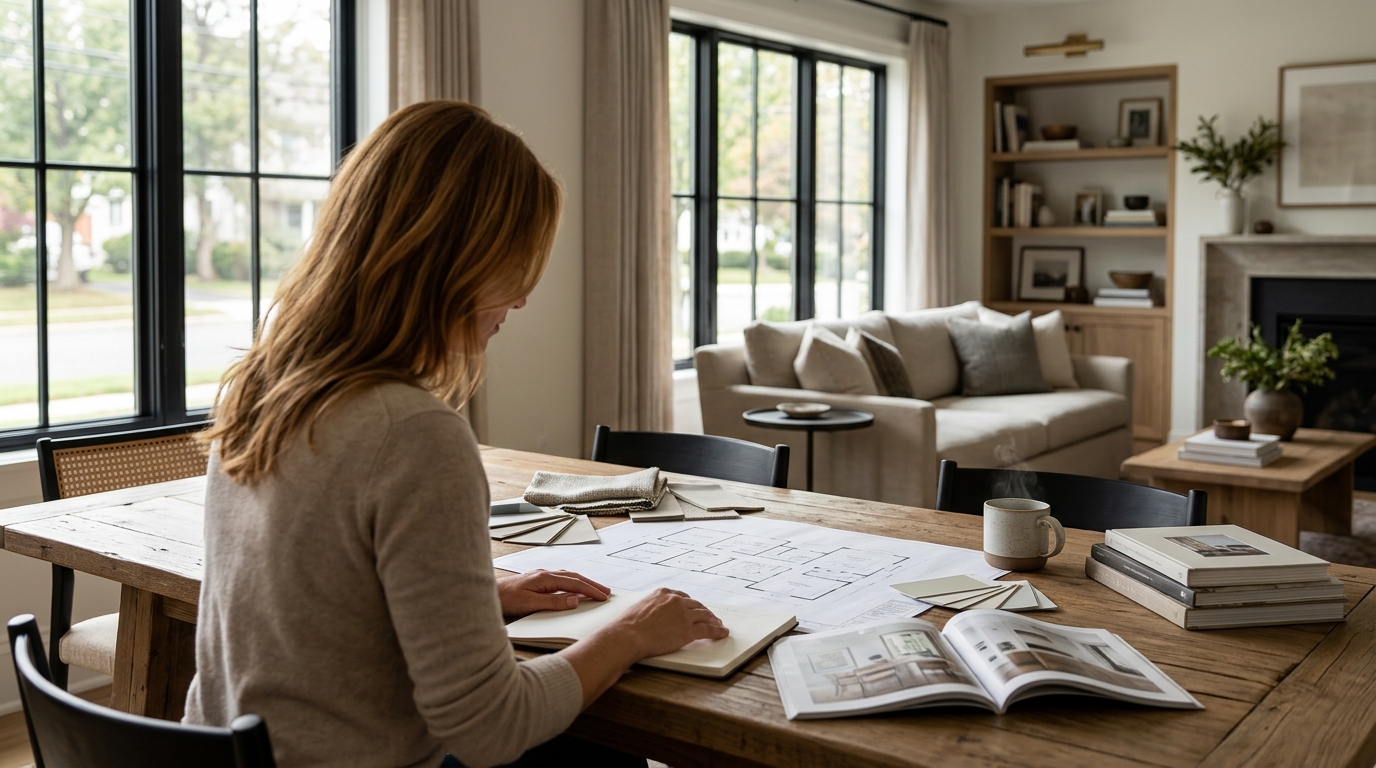
Every homeowner eventually faces a design challenge that makes a room feel "off." Whether it is an awkward layout, poor lighting, clashing colors, or a lack of storage, these issues are far more universal than you might think. The good news is that most residential interior design problems have practical, affordable solutions. In this guide, the team at Julieta Alvarez Interiors walks you through the most common pain points we see across New Jersey, New York, and Connecticut homes and shows you exactly how to fix them.
1. Fixing Awkward Room Layouts
A floor plan is the invisible backbone of every great room. When furniture placement ignores traffic flow, daily life becomes harder than it needs to be. A sofa blocking a doorway or a dining table that is too large for the room forces you to navigate around obstacles instead of moving freely.
The Professional Fix
Start by mapping your room to scale and identifying natural pathways. Leave at least 36 inches for major walkways and 18 inches between a coffee table and sofa. Pulling furniture away from walls and creating conversation groupings can actually make a room feel larger and more intentional. For complex open-concept spaces, our Montclair living room projects show how zone-based planning brings order to large, undefined areas.
2. Making Small Spaces Feel Larger
A small space is any room where square footage limits the furnishings and activities you can comfortably fit. From Hoboken apartments to compact suburban bedrooms, limited square footage is one of the most common residential design challenges.
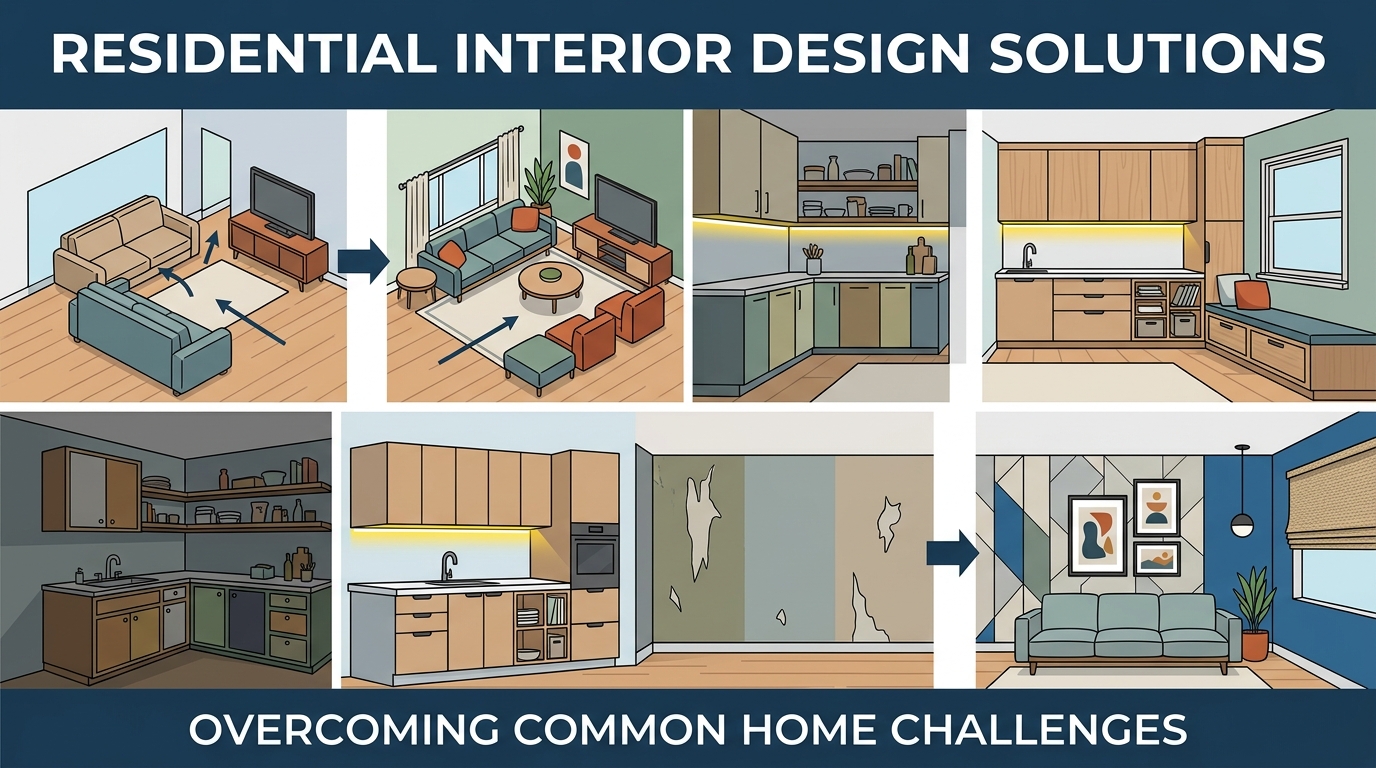
Strategies That Work
Use light or neutral wall colors and glossy surfaces that reflect light to create the illusion of depth. Choose low-profile, multifunctional furniture such as storage ottomans or nesting tables. Mirrors placed opposite windows amplify natural light and visually double the room. Bespoke built-ins tailored to your exact dimensions justify every square foot, as noted by design experts at Aertsen Interiors.
3. Solving Poor Lighting
Layered lighting is the practice of combining ambient, task, and accent light sources at different heights throughout a room. Relying on a single overhead fixture is the most common lighting mistake homeowners make, creating harsh shadows and an unwelcoming atmosphere.
A Three-Layer Approach
Combine a central ceiling fixture with table lamps, floor lamps, and under-cabinet task lights. Install dimmer switches so you can adjust the mood from bright work light to soft evening glow. Do not block windows with heavy curtains; sheer panels preserve privacy while maximizing daylight. Our warm transitional kitchen in Montclair demonstrates how pendant lights over an island paired with recessed ceiling fixtures create balanced, functional illumination.
4. Correcting Color and Paint Mistakes
A color palette is a curated set of hues used consistently across a room or home to create visual harmony. One frequent misstep is painting walls first and then trying to match furniture and fabrics afterward. Because paint comes in thousands of shades but furniture and textile options are far more limited, this sequence almost guarantees a mismatch.
The Right Order
Select your largest, hardest-to-change pieces first, such as sofas, rugs, and countertops. Then pull paint colors from those items. Always test samples on your walls at different times of day because natural light dramatically shifts how a color reads. When rooms throughout the home feel disconnected, establish a unifying color family and carry at least one shared accent tone from space to space. Explore how we harmonize palettes in our eclectic family room design.
5. Tackling Storage Shortages
Insufficient storage ranks among the top frustrations for homeowners, especially in newer construction that often lacks built-in cabinetry. Without smart solutions, clutter accumulates quickly and undermines even the most beautiful design.
Practical Solutions
Floating shelves add display and storage without consuming floor space. Multifunctional furniture with hidden compartments, such as lift-top coffee tables and beds with drawers, keeps belongings organized and out of sight. Custom built-ins transform awkward alcoves and underused hallways into high-value storage zones. See how our full home renovation in Montclair incorporated built-in solutions throughout the house.
6. Updating Dated Architectural Features
Older homes in New Jersey and the tri-state area often come with charming but outdated elements like retro tile, dark wood paneling, or awkward window placements. Removing them is not always possible or desirable.
Blend Old and New
When a feature cannot be removed, update its materials, colors, or finishes to align with current aesthetics. An exposed brick wall, for example, can be sealed and paired with modern pendant lighting for a contemporary rustic look. Oversized or oddly placed windows benefit from floor-length curtains that add proportion and elegance. Our traditional kitchen renovation in Short Hills shows how classic architecture can coexist with modern functionality.
Common Problems at a Glance
| Problem | Root Cause | Quick Fix | Professional Solution |
|---|---|---|---|
| Awkward layout | No traffic-flow planning | Rearrange furniture off walls | Custom floor plan with zones |
| Room feels small | Dark colors, bulky furniture | Add mirrors and light tones | Built-ins and space planning |
| Poor lighting | Single overhead fixture | Add table and floor lamps | Layered lighting design |
| Color clashes | Painting before furnishing | Test samples in daylight | Whole-home color consultation |
| No storage | Lack of built-in cabinetry | Floating shelves, baskets | Custom millwork and cabinetry |
| Dated features | Original finishes untouched | New hardware and paint | Renovation blending old and new |
Key Takeaways
- Most residential design problems stem from layout, lighting, color, storage, or outdated features.
- Always plan furniture placement around traffic flow, leaving at least 36 inches for main pathways.
- Layer three types of lighting (ambient, task, accent) to eliminate harsh shadows and create warmth.
- Choose large furnishings and textiles before selecting paint colors to avoid costly mismatches.
- Multifunctional furniture and custom built-ins are the most effective weapons against clutter.
- Dated architectural details can become design assets when updated with modern finishes and paired thoughtfully.
- A professional interior designer saves time and money by solving these problems holistically from the start.
Frequently Asked Questions
What is the most common interior design mistake homeowners make?
The most frequent mistake is neglecting the floor plan. Pushing all furniture against the walls creates an empty, disconnected center. Planning furniture groupings around how you actually use the room is the fastest way to improve any space.
How can I make a small room look bigger without renovating?
Use light, neutral paint colors, hang mirrors opposite windows, choose low-profile furniture, and keep clutter to a minimum. These optical strategies can make a room feel significantly more spacious without any construction work.
Why does my room feel dark even with overhead lighting?
A single ceiling fixture casts uniform light from one direction, creating flat illumination and shadows in corners. Adding table lamps, floor lamps, and accent lighting at varying heights introduces depth and warmth.
Should I pick paint colors before or after buying furniture?
After. Furniture and fabric options are more limited than paint shades. Start with sofas, rugs, and key textiles, then select complementary paint colors. This approach virtually eliminates color-matching headaches.
How do I update an outdated kitchen without a full renovation?
Swap hardware, update light fixtures, add a new backsplash, and repaint or reface cabinets. These targeted changes deliver a modern look at a fraction of the cost of a gut renovation. For larger projects, see our Montclair kitchen renovation portfolio.
What problems does a professional interior designer solve?
Designers address layout inefficiencies, color coordination, lighting balance, furniture sourcing, storage planning, and budget management. They also manage contractor timelines and vendor relationships, reducing stress and costly errors.
How much does it cost to hire an interior designer in New Jersey?
Fees vary widely based on scope. Hourly rates for experienced designers in New Jersey typically range from $150 to $450 per hour, while flat-fee projects depend on room count and complexity. Many firms, including Julieta Alvarez Interiors, offer initial consultations to discuss budget and scope.
Can I mix different design styles in one home?
Yes, but it requires a unifying thread. Carry a consistent color palette, material, or texture across rooms so that transitions feel intentional rather than jarring. A professional designer excels at blending styles cohesively.
Ready to Transform Your Home?
If any of these challenges sound familiar, you do not have to solve them alone. Julieta Alvarez Interiors brings over a decade of experience transforming homes across New Jersey, New York, and Connecticut. From single-room makeovers to whole-home renovations, we tailor every solution to your lifestyle and budget. Contact us today to schedule your consultation and take the first step toward a home that truly works for you.