
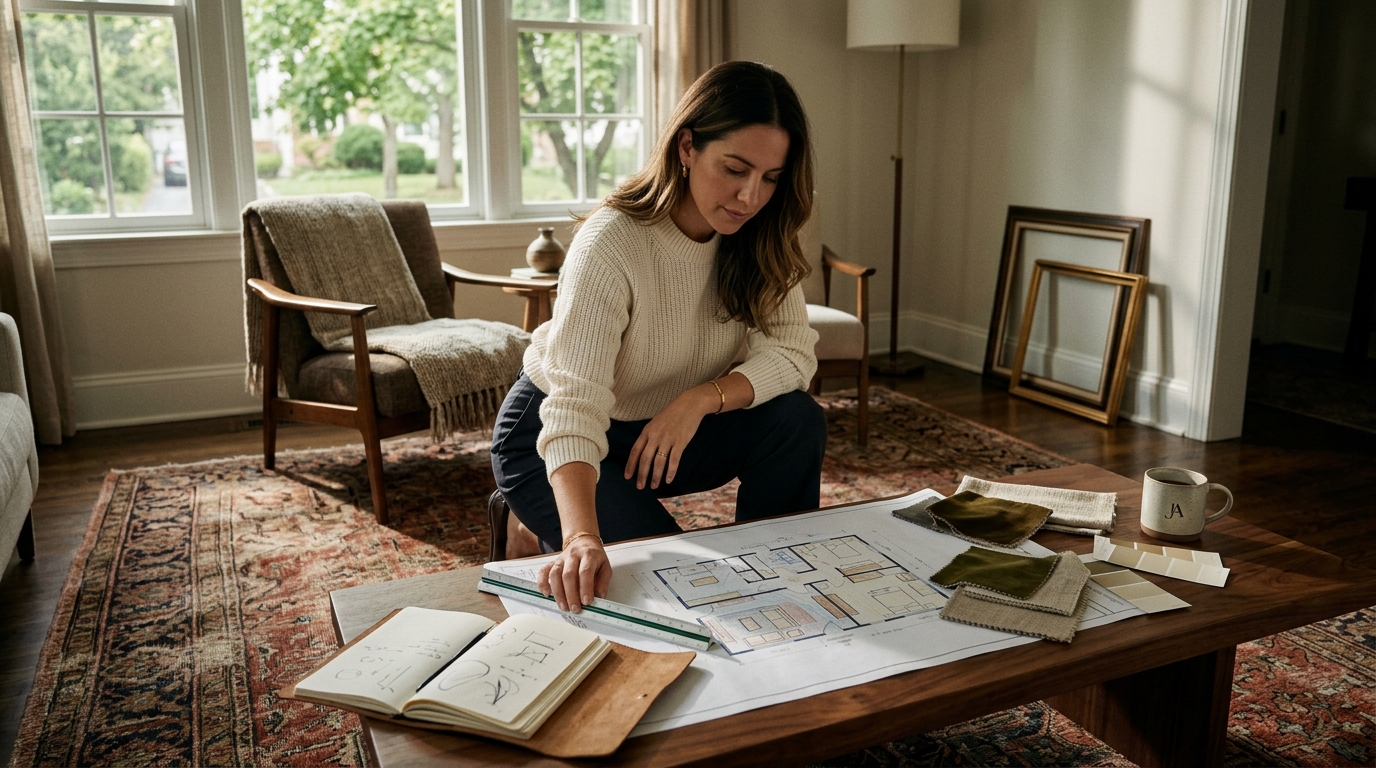
Every homeowner eventually bumps into a design challenge that makes a room feel "off." Maybe the layout is awkward, the lighting falls flat, or you simply cannot settle on a color palette. The good news is that most residential interior design problems have straightforward fixes once you understand what is going wrong and why. In this guide, we walk through the issues we see most often at Julieta Alvarez Interiors and share practical solutions you can act on today, whether you tackle them yourself or bring in a professional designer.
1. Awkward Room Layouts and Poor Flow
A floor plan is a bird's-eye view of your design project that defines how every square foot will be used. Without one, furniture ends up in odd spots and traffic paths feel forced. A common mistake is pushing all furniture against the walls, which leaves an empty, disconnected center.
Float Your Furniture
Pull seating away from walls to create conversational groupings. In large rooms, use area rugs to anchor separate zones, such as a reading nook beside the main seating area. Our design services always begin with a detailed floor plan so every piece has a purpose.
Respect the Traffic Path
Leave at least 36 inches for main walkways and 18 inches between a coffee table and sofa. These clearances keep a room functional without sacrificing style.
2. Making Small Spaces Feel Larger
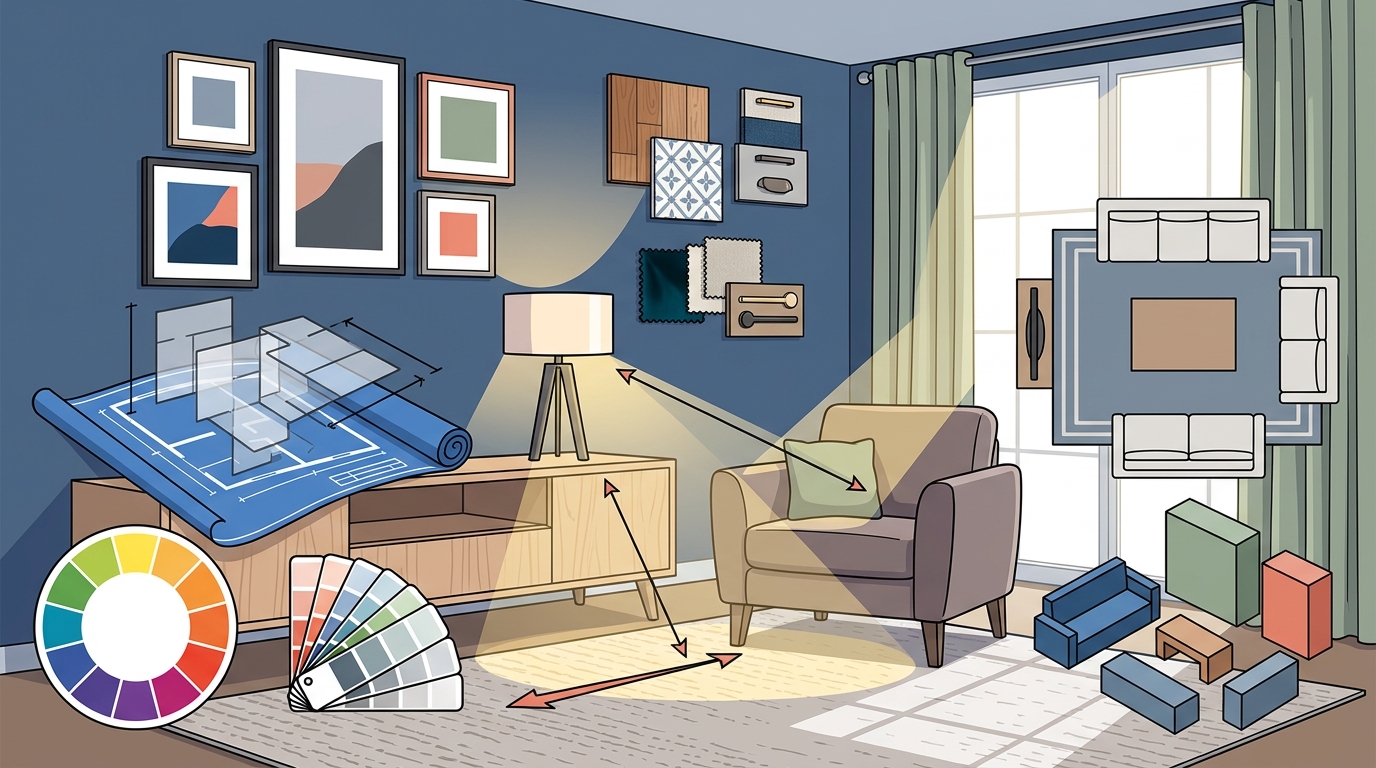
Space planning is the process of organizing furniture and fixtures to maximize both function and visual openness. Small rooms only feel cramped when they are not thoughtfully arranged. Light or neutral wall colors, glossy surfaces, and mirrors all create the illusion of more square footage.
Choose the Right Scale
Select a few quality, low-profile pieces rather than cramming in oversized furniture. Multifunctional items, like a storage ottoman or a console that doubles as a desk, save valuable floor space.
Use Vertical Space
Floating shelves draw the eye upward and free up floor area. Vertical stripe patterns on walls can also make ceilings appear taller. Julieta Alvarez has earned a reputation for space planning even inside very limited interiors.
3. Choosing the Right Color Palette
A color palette is a coordinated set of hues used throughout a space to establish mood and visual harmony. Colors can make or break your interior design, yet many homeowners start by painting walls first, only to find their furniture and fabrics clash later.
Start With Fabrics, Not Paint
Paint comes in thousands of shades, but sofa and rug options are more limited. Pick those anchor pieces first, then choose wall colors that complement them. Always test paint samples on your actual walls at different times of day, because lighting changes how a color reads.
Think in Color Families
Stick to a cohesive palette of three to five colors and repeat them in varying proportions across the room. When in doubt, a warm neutral base with one or two accent hues keeps things fresh yet timeless. Our color consultation service helps clients in the tri-state area get this balance right the first time.
4. Fixing Poor Lighting
Layered lighting is the practice of combining ambient, task, and accent light sources at different heights to create depth and warmth. Relying on a single overhead fixture is one of the most common mistakes homeowners make, resulting in harsh shadows and a flat atmosphere.
| Lighting Layer | Purpose | Examples |
|---|---|---|
| Ambient | General illumination | Recessed cans, flush-mount ceiling fixtures |
| Task | Focused work light | Under-cabinet strips, desk lamps, reading sconces |
| Accent | Highlight features or art | Track lights, picture lights, LED tape |
Mirrors amplify both natural and artificial light, and lighter wall colors improve reflectivity. Avoid blocking windows with heavy curtains; instead, opt for sheer panels that let daylight pour in.
5. Solving Storage and Clutter Issues
Insufficient storage is the silent saboteur of good design. New-build homes and older properties alike can lack adequate built-in solutions, leaving belongings without a permanent home. Before buying storage furniture, sort and purge what you own in each room.
Smart Storage Strategies
Floating shelves in the living room save floor space. Beautiful closed cabinets can serve as focal points while hiding everyday essentials. Custom built-ins and millwork, a specialty of our Millburn-area projects, maximize every inch of a room's footprint.
6. Creating Cohesion Between Rooms
When you decorate room by room, your home can start to feel disjointed. A modern living room beside a farmhouse kitchen creates visual friction rather than flow. The fix is a whole-home design strategy that carries a consistent thread of color, material, or style from one space to the next.
At Julieta Alvarez Interiors, we believe each room should mix into the others smoothly. We achieve this through a unified color story, repeated textures, and a curated mix of new and vintage pieces. Explore our design philosophy to see how blending old and new creates warmth and personality throughout an entire home.
7. Staying on Budget Without Sacrificing Style
Budget anxiety is one of the biggest barriers to starting a design project. Unplanned expenses, unclear agreements, and scope creep can derail even the most exciting renovation. Interior design fees have increased steadily since 2014, according to Statista, making upfront planning more important than ever.
Cost-Saving Tips
- Repurpose existing furniture with new upholstery or hardware.
- Prioritize high-impact items (sofa, rug, lighting) and fill in accessories over time.
- Paint and tile replacement are low-budget refreshes that deliver big visual impact.
- Work with a designer who offers transparent budgeting. Our philosophy is that style has no budget; we customize plans to fit every price point.
Key Takeaways
- Always start with a floor plan before purchasing furniture to avoid layout mistakes.
- Use light colors, mirrors, and multifunctional furniture to open up small rooms.
- Choose fabrics and rugs first, then select paint colors to match.
- Layer three types of lighting (ambient, task, accent) instead of relying on one fixture.
- Build in smart storage early to prevent chronic clutter.
- Maintain a consistent color story and material palette across every room for cohesion.
- Set a realistic budget and work with a designer who offers transparent cost planning.
Frequently Asked Questions
What is the most common interior design mistake homeowners make?
Relying on a single overhead light source is among the top mistakes. Layering ambient, task, and accent lighting instantly makes any room feel warmer and more functional.
How do I make a small room look bigger without renovating?
Use light or neutral paint colors, add mirrors to reflect light, choose low-profile furniture, and keep the floor as clear as possible with wall-mounted shelves.
Should I pick paint colors before or after buying furniture?
After. Paint is available in virtually unlimited shades, while furniture and fabric options are more limited. Start with your anchor pieces and then select a complementary wall color.
How can I create a cohesive look throughout my whole home?
Develop a unified color palette of three to five hues and repeat it in varying proportions in every room. Carry at least one consistent material, like a wood tone or metal finish, from space to space.
Is hiring an interior designer worth the cost?
Yes. A professional designer helps you avoid expensive mistakes, access trade-only pricing on furnishings, and arrive at a finished result faster. Many firms, including Julieta Alvarez Interiors, adapt their process to a range of budgets.
What should I do first when redesigning a room?
Start with a floor plan that maps traffic flow and furniture placement. This single step prevents the most common layout problems and gives every subsequent decision a framework.
How do I fix a room that feels cluttered but has no extra storage?
Sort and purge belongings first. Then add multifunctional furniture, floating shelves, or custom built-ins to create storage without sacrificing style or floor space.
Ready to Transform Your Space?
If any of these problems sound familiar, you do not have to solve them alone. Schedule a consultation with Julieta Alvarez Interiors and let our team create a personalized design plan that fits your style, space, and budget. Call us at (917) 355-4414 or fill out our contact form to get started.