
Steps to Implement a Modern Residential Interior Design
Transforming your home into a modern, cohesive space does not happen by accident. It takes a structured process that balances creativity with practical planning, from the very first conversation about your vision to the final placement of accessories on a styled shelf. Whether you are planning a single-room refresh in Montclair or a whole-home renovation in Short Hills, understanding each phase helps you stay on budget, on schedule, and fully in love with the result. Below, we walk through the essential steps that professional designers follow to bring modern residential interiors to life.
Step 1: Initial Consultation and Discovery
Every successful interior design project begins with a thorough consultation. A design consultation is a dedicated meeting where the designer learns about your lifestyle, aesthetic preferences, functional requirements, and budget. This foundational step ensures that every decision made later reflects how you actually live in your home.
During this phase, your designer will tour the space, take measurements, snap photographs, and ask targeted questions about your daily routines. At Julieta Alvarez Interiors, this discovery conversation covers everything from entertaining habits to storage needs, so the design direction is grounded in real life rather than trends alone.
What to Prepare
Come ready with inspiration images, a list of must-haves versus nice-to-haves, and a realistic budget range. The more detail you share, the more personalized the outcome will be.
Step 2: Concept Development and Mood Boards
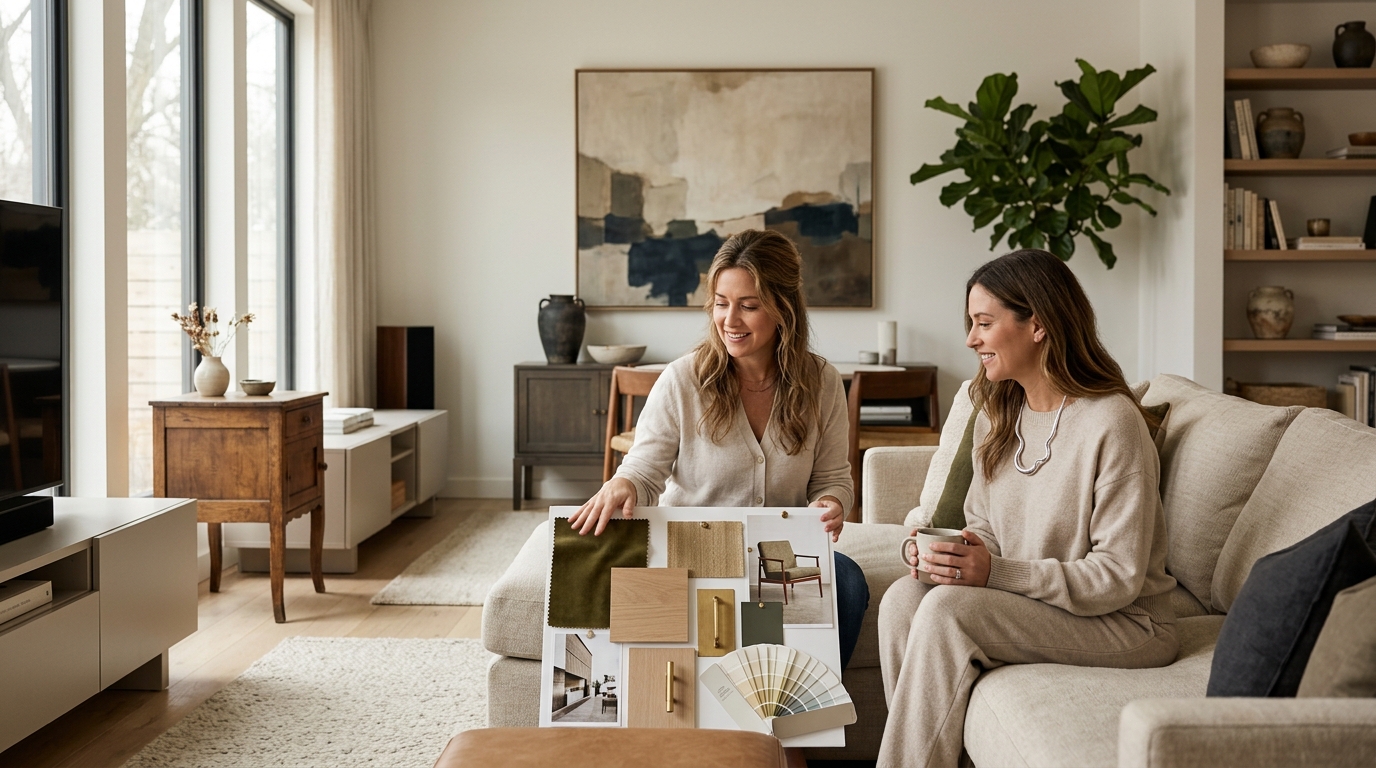
Once the discovery phase wraps up, your designer translates all that information into a visual concept. A mood board is a curated collection of images, color palettes, textures, and material samples that communicates the intended feel of a space. It acts as the creative north star for every selection that follows.
Modern residential concepts in 2025 often blend clean lines with warm, layered textures. Styles like Japandi and vintage revival continue to influence projects across the tri-state area. You can see how Julieta Alvarez Interiors balances old and new elements in the eclectic living and family room project in Montclair.
Step 3: Space Planning and Floor Plans
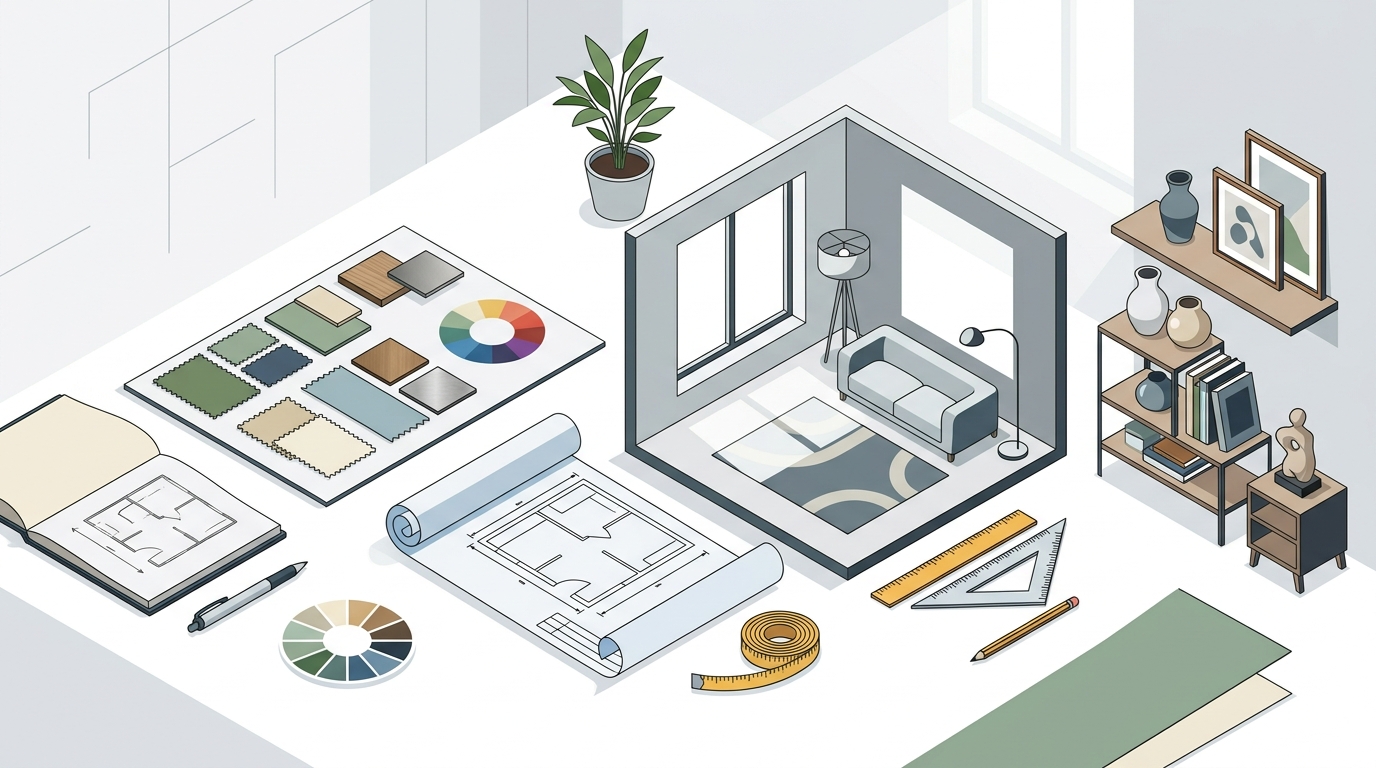
Space planning is the process of organizing furniture, fixtures, and circulation paths within a room to maximize both function and flow. It is arguably the most technical step, bridging creativity and practicality.
Designers use tools like AutoCAD and SketchUp to test layouts digitally before committing to any physical changes. Effective space planning considers traffic patterns, natural light sources, and focal points such as fireplaces or architectural windows. For kitchens, this step is especially critical; explore how layout decisions shaped the warm transitional kitchen in Montclair.
Step 4: Design Development and Material Selection
With the floor plan locked, it is time to refine every surface and finish. During design development, the designer selects flooring, cabinetry, countertops, lighting fixtures, paint colors, and hardware. Each choice must align with the concept while meeting durability and maintenance requirements.
This phase also involves preparing detailed specifications that contractors can follow precisely. Budget reviews happen here too, making sure material upgrades stay within the agreed-upon range. For inspiration on how materials come together in a renovation, browse the traditional kitchen renovation in Short Hills.
| Phase | Primary Activities | Typical Duration |
|---|---|---|
| Consultation | Site visit, lifestyle interview, budget discussion | 1 to 2 weeks |
| Concept Development | Mood boards, color palettes, style direction | 2 to 3 weeks |
| Space Planning | Floor plans, furniture layouts, circulation mapping | 2 to 4 weeks |
| Design Development | Material specs, finish selections, contractor docs | 3 to 6 weeks |
| Visualization | 3D renderings, virtual walkthroughs, client review | 1 to 3 weeks |
| Implementation | Contractor coordination, procurement, construction | 2 to 6 months |
| Final Styling | Accessory placement, art hanging, reveal day | 1 to 2 weeks |
Step 5: Visualization and Client Approval
Before construction begins, your designer creates realistic previews of the finished space. Modern software such as SketchUp, Revit, and 3ds Max produces lifelike renderings that show lighting, textures, and furniture in context. Some designers even offer augmented reality walkthroughs so clients can experience the design at scale.
This step is critical for building client confidence. Reviewing renderings allows you to request adjustments while changes are still inexpensive, rather than after drywall is already up.
Step 6: Implementation and Installation
Implementation is where plans become reality. Your designer coordinates with contractors, electricians, plumbers, and millworkers to execute the approved design. Procurement runs in parallel: furniture, lighting, and accessories are ordered, tracked, and inspected before delivery.
Strong project management during this phase keeps timelines tight and budgets intact. For large-scale projects like a full home renovation in Montclair, the designer remains on site regularly to verify that every detail matches the specification documents.
Step 7: Final Styling and Reveal
The last step is what makes a designed home feel truly alive. Final styling includes placing art, arranging bookshelves, adding throw pillows, and adjusting lighting scenes. It is the layer that transforms a well-built room into an emotionally resonant space.
At Julieta Alvarez Interiors, this phase also includes a client walkthrough to review every detail together. See the level of finish achieved in the luxury full home renovation in Scarsdale, NY.
Key Takeaways
- A structured, step-by-step design process keeps residential projects organized and on budget.
- The initial consultation is the most important step because it aligns every later decision with how you actually live.
- Space planning bridges creative vision and practical function through digital layout tools.
- Material selection during design development must balance aesthetics, durability, and cost.
- 3D visualization lets you approve or adjust designs before expensive construction begins.
- Professional project management during implementation prevents costly delays and errors.
- Final styling is the finishing touch that gives a modern home warmth and personality.
Frequently Asked Questions
How long does a full residential interior design project take?
It depends on scope. Small decorating projects can wrap up in a few weeks, while large renovations may span several months from consultation to reveal day.
Do I need a professional designer for a modern home update?
While DIY is possible for minor refreshes, professional expertise provides access to trade resources, vendor relationships, and project management that protect your investment. According to HomeAdvisor, 38% of homeowners regret not hiring a professional for their projects.
What is included in a design consultation?
A typical consultation includes a site visit, lifestyle interview, budget discussion, and an overview of the designer's process and fees. You can schedule a consultation with Julieta Alvarez Interiors to get started.
How much does interior design cost in New Jersey?
Costs vary widely based on project size, materials, and scope. Many designers offer tiered service packages. Discuss your budget openly during the consultation so the designer can tailor selections to your range.
What design styles work best for modern residential interiors?
Popular styles in 2025 include minimalism, Japandi, and vintage revival. Blending styles is common; a skilled designer helps you find the right balance between trendy and timeless.
Can I hire a designer for just one room?
Absolutely. Single-room makeovers are a core offering at many firms. Whether it is a kitchen, bathroom, or living room, a focused project still benefits from a professional process. View examples on the Julieta Alvarez Interiors portfolio page.
What should I bring to my first meeting with an interior designer?
Prepare inspiration images, a written list of priorities, an honest budget range, and any architectural plans or surveys you already have. The more information you share, the better your designer can tailor the concept.
Ready to Start Your Modern Home Transformation?
If you are planning a residential interior design project in New Jersey, New York City, Westchester, or Connecticut, Julieta Alvarez Interiors can guide you from first concept to final reveal. Contact Julieta Alvarez Interiors today to schedule your initial consultation and take the first step toward a home that looks and feels exactly like you.