
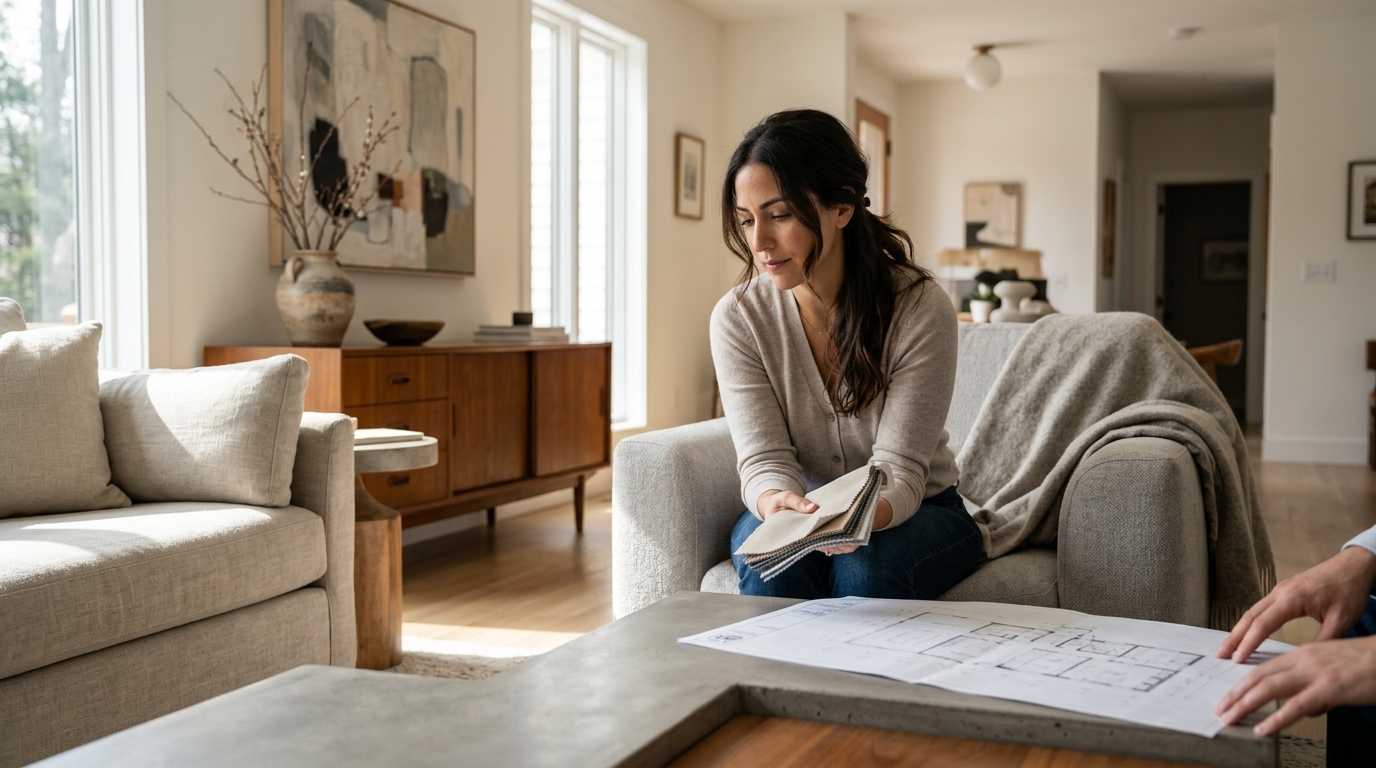
Steps to Implement a Modern Residential Interior Design
Transforming your home into a modern, functional space takes more than picking trendy furniture. It requires a structured process that balances aesthetics, practicality, and personal style. Whether you are planning a full home renovation or refreshing a single room, understanding the step-by-step workflow that professional designers follow will help you achieve polished results on any budget. Below, we break down every phase of a modern residential interior design project so you can move forward with confidence and clarity.
1. Start with a Style Discovery Session
A style discovery session is an in-depth conversation between designer and homeowner that uncovers personal preferences, lifestyle needs, and aesthetic direction. Before any design work begins, this step ensures every decision that follows reflects who you actually are.
At Julieta Alvarez Interiors, this process involves exploring what you love, from specific wall colors to furnishing styles. The goal is to build a foundation of taste and personality that guides the entire project. This collaborative dialogue also surfaces practical requirements like storage needs, family size, and daily routines.
Why It Matters for Modern Design
Modern residential design thrives on intentionality. Every piece in the room should earn its place. A thorough discovery session prevents costly missteps and ensures cohesion across rooms. According to the American Society of Interior Designers (ASID), clearly articulated goals at project outset correlate with higher client satisfaction rates.
2. Define Your Budget and Project Scope
Project scope is the formal outline of which rooms, surfaces, and elements will be addressed during your design engagement. Setting this boundary early prevents scope creep and keeps timelines realistic.
Decide whether you need a full home renovation or a targeted update to one area. Modern design does not require an unlimited budget. The philosophy that "style has no budget" means smart sourcing and prioritization can produce striking results at various price points.
| Project Type | Typical Scope | Timeline Estimate |
|---|---|---|
| Single-Room Makeover | Furniture, paint, accessories | 4 to 8 weeks |
| Kitchen or Bathroom Renovation | Cabinetry, fixtures, surfaces, lighting | 8 to 16 weeks |
| Whole-Home Design | Every room, cohesive flow, construction coordination | 4 to 12 months |
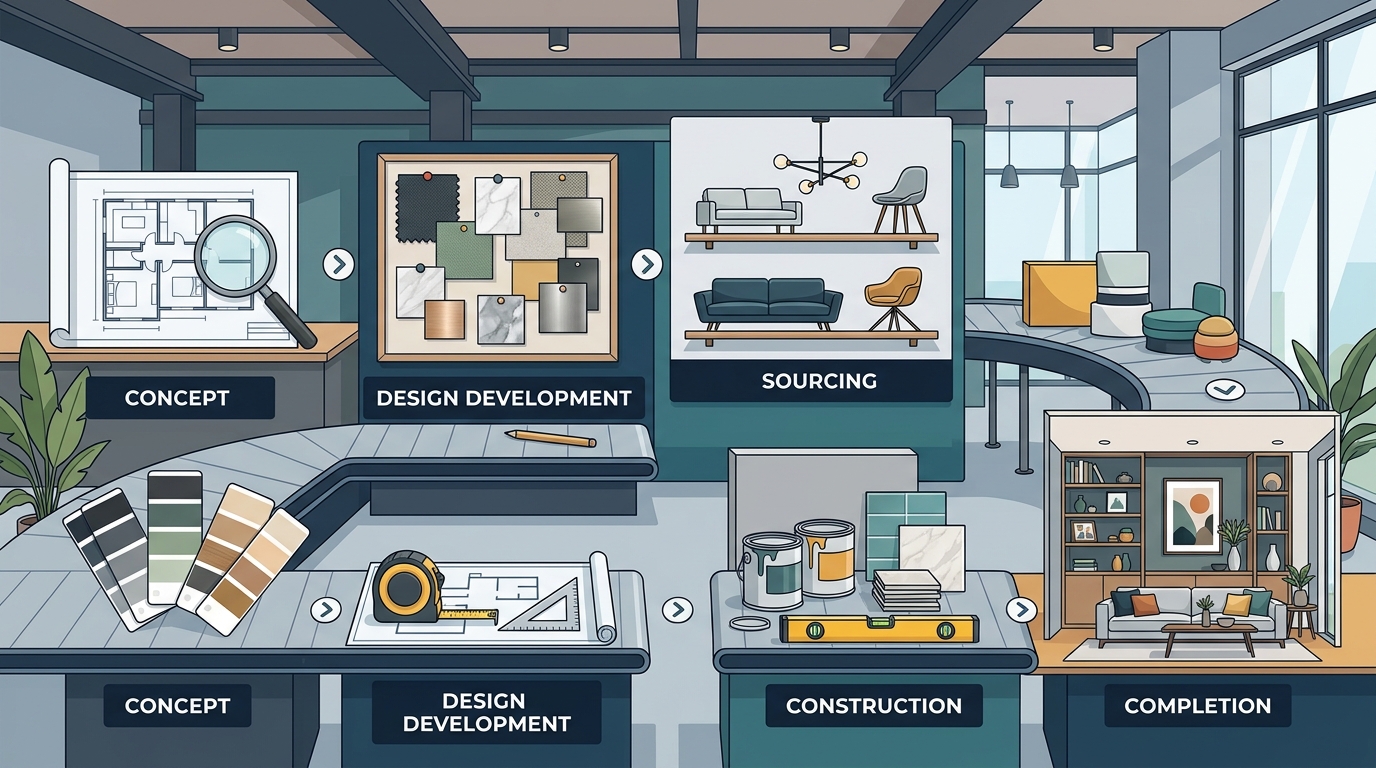
3. Create an Accurate Floor Plan
A floor plan is a scaled drawing that defines how each area of your home will be used, showing furniture placement, traffic flow, and spatial relationships. This step is critical because even beautiful furnishings will feel awkward in a poorly planned layout.
Professional designers develop floor plans that account for parameters like natural light, architectural features, and daily movement patterns. A well-crafted plan also clarifies which design services you will need, from millwork to window treatments.
Space Planning in Smaller Homes
Modern design particularly benefits compact spaces. Skilled space planning can make a 1,200-square-foot home feel open and organized through multi-functional furniture, strategic sight lines, and minimal visual clutter.
4. Select Your Color Palette and Materials
Color consultation is the process of choosing wall colors, finishes, and accent tones that complement your architecture, furniture, and natural light. In modern residential design, neutral bases paired with bold accents create visual interest without overwhelming a space.
Working with a specialized color consultant ensures that tones work harmoniously across rooms. Colors interact with lighting conditions throughout the day, so professional guidance prevents the common mistake of selecting paint colors under showroom lighting alone.
Trending Modern Palettes for 2026
Warm neutrals, earthy greens, and soft terracotta tones continue to dominate modern interiors. According to the Pantone Color Institute, nature-inspired hues remain central to contemporary residential design. Pair these with matte black hardware and light wood finishes for a balanced modern look.
5. Source Furnishings, Art, and Accessories
Sourcing is the process of selecting and procuring every physical element that enters the space, from sofas and rugs to throw pillows and artwork. This step brings the design concept to life.
A full-service firm handles sourcing from trade-only vendors and artisan makers, ensuring quality and exclusivity. The best modern interiors blend new and vintage pieces, mixing different textures, wood, and metal finishes for a look that feels chic yet warm. Explore project examples like a warm transitional kitchen in Montclair or an eclectic living room design to see how material choices shape a finished space.
Custom vs. Ready-Made Pieces
Custom millwork and made-to-order upholstery offer exact sizing and unique character. Ready-made options reduce lead times and costs. A skilled designer blends both categories to balance budget with personality.
6. Manage Execution and Installation
Execution encompasses contractor coordination, product deliveries, and final installation of all furnishings and finishes. This phase requires meticulous project management to keep deadlines, budgets, and quality standards on track.
Your designer should work hand in hand with architects, contractors, and subcontractors to seamlessly deliver results. Timely oversight of deliveries and installations prevents damage, delays, and costly rework. When every room of a whole-home project must flow cohesively into the next, professional supervision is not optional.
Final Styling and Personal Touches
The last layer of a modern design project is styling: arranging books, adding greenery, positioning art, and layering textiles. This step turns a designed room into a lived-in home. To see finished results, browse the interior design portfolio at Julieta Alvarez Interiors.
Key Takeaways
- Begin every project with a style discovery session to align design decisions with your personality and lifestyle.
- Set a clear budget and scope before selecting a single material or furnishing.
- An accurate floor plan prevents layout mistakes and maximizes usable space.
- Professional color consultation ensures palettes work under real lighting conditions throughout your home.
- Source a mix of custom, vintage, and ready-made pieces for character and cost efficiency.
- Hire a full-service firm to manage execution, contractor coordination, and installation timelines.
- Final styling transforms a designed room into a space that truly feels like home.
Frequently Asked Questions
How long does a modern residential interior design project take?
Timelines vary by scope. A single-room refresh can take 4 to 8 weeks, while a full home renovation often spans 4 to 12 months depending on construction requirements and product lead times.
Do I need a professional designer for a modern look?
While DIY updates are possible, a professional brings trade-only resources, space planning expertise, and project management skills that save time and costly mistakes.
What is the first step in an interior design project?
The first step is a style discovery session where the designer learns about your lifestyle, taste, and vision. This conversation establishes the creative direction for the entire project.
How much does residential interior design cost?
Costs depend on project scope, materials, and location. Many firms, including Julieta Alvarez Interiors, offer flexible, budget-adaptive plans to accommodate a range of investment levels.
What is the difference between interior design and decorating?
Interior design addresses spatial planning, architectural modifications, and functional layout. Decorating focuses on surface-level aesthetics like furniture, color, and accessories. A full-service firm typically handles both.
Can I mix modern and traditional elements?
Absolutely. Blending new and old pieces, different textures, and varied finishes is a hallmark of sophisticated modern design. This approach creates depth and avoids a sterile, catalog-like appearance.
How do I choose the right interior designer?
Review portfolios, read client reviews, and schedule an initial consultation. Look for a designer whose aesthetic range, communication style, and process align with your goals.
Ready to Start Your Modern Design Project?
If you are planning a residential renovation or refresh in New Jersey, New York, Westchester, or Connecticut, Julieta Alvarez Interiors offers full-service design from discovery through installation. Schedule your consultation today and take the first step toward the home you have always envisioned.