
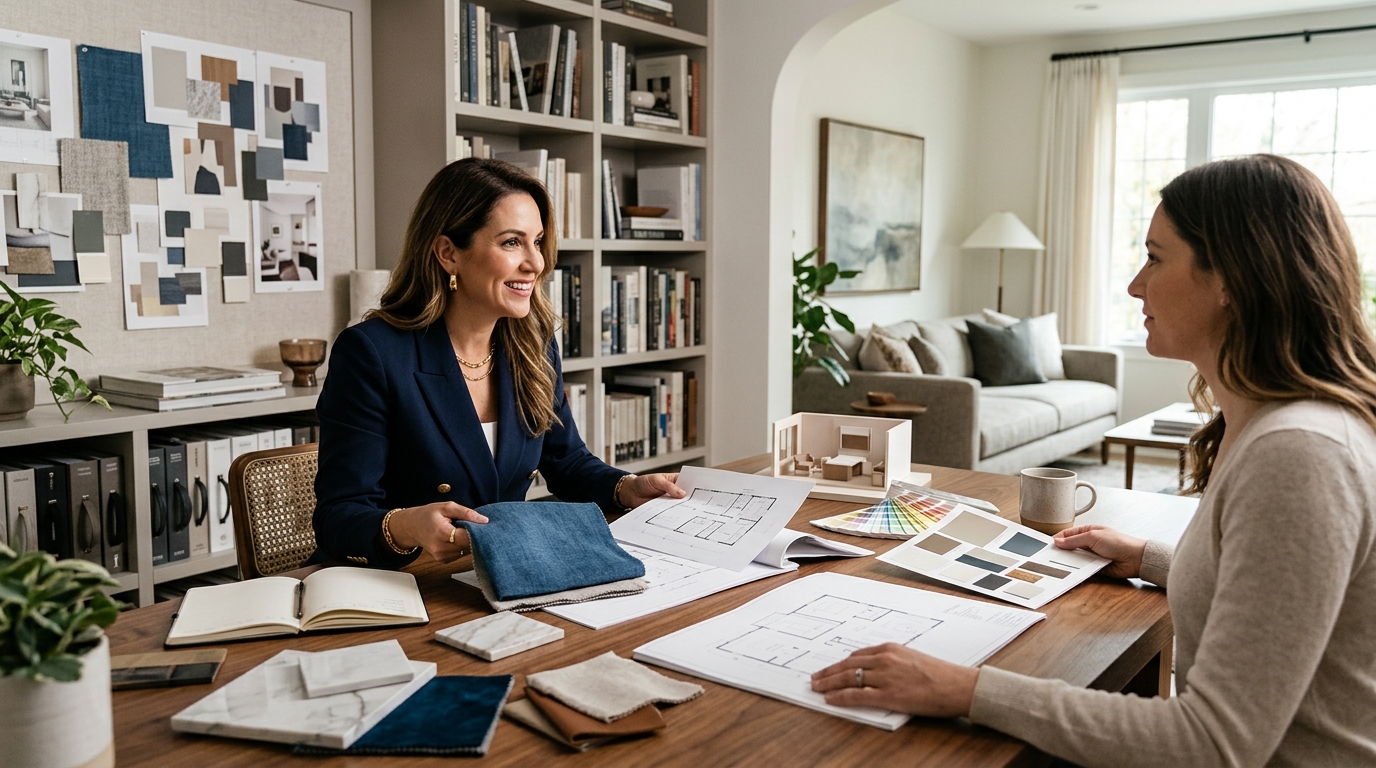
Transforming an entire home is exciting, but it can also feel overwhelming without a clear roadmap. Full-service residential interior design is a comprehensive approach in which a professional designer manages every detail of your project, from the first conversation about your vision to the final placement of accessories on your shelves. Understanding each phase helps you set realistic expectations, protect your budget, and enjoy the journey. Below, we walk you through the proven process used at Julieta Alvarez Interiors, a New Jersey-based firm led by NYSID graduate Julieta Alvarez with over a decade of experience in residential and commercial design.
Discovery and Initial Consultation
Every full-service project begins with a conversation. A discovery consultation is a structured meeting where the designer learns about your lifestyle, aesthetic preferences, functional needs, and budget range. At Julieta Alvarez Interiors, this first session also covers the scope of work, whether you need a full home renovation or a targeted kitchen redesign.
During discovery, the designer conducts a site survey to assess architectural features, natural light patterns, and structural constraints. Accurate measurements and photographs taken at this stage form the foundation for every decision that follows.
Concept Development and Space Planning
A design concept is a unified creative direction that translates your goals into a cohesive visual theme. In this phase the designer produces mood boards, preliminary color palettes, and initial floor plans that map traffic flow and furniture placement.
Why Space Planning Matters
Space planning is the strategic arrangement of rooms, furnishings, and circulation paths to maximize both function and comfort. A well-planned layout prevents costly surprises during construction and ensures every room connects logically to the next. If you are redesigning a living room or an open-concept family area, this step determines how the space will actually feel day to day.
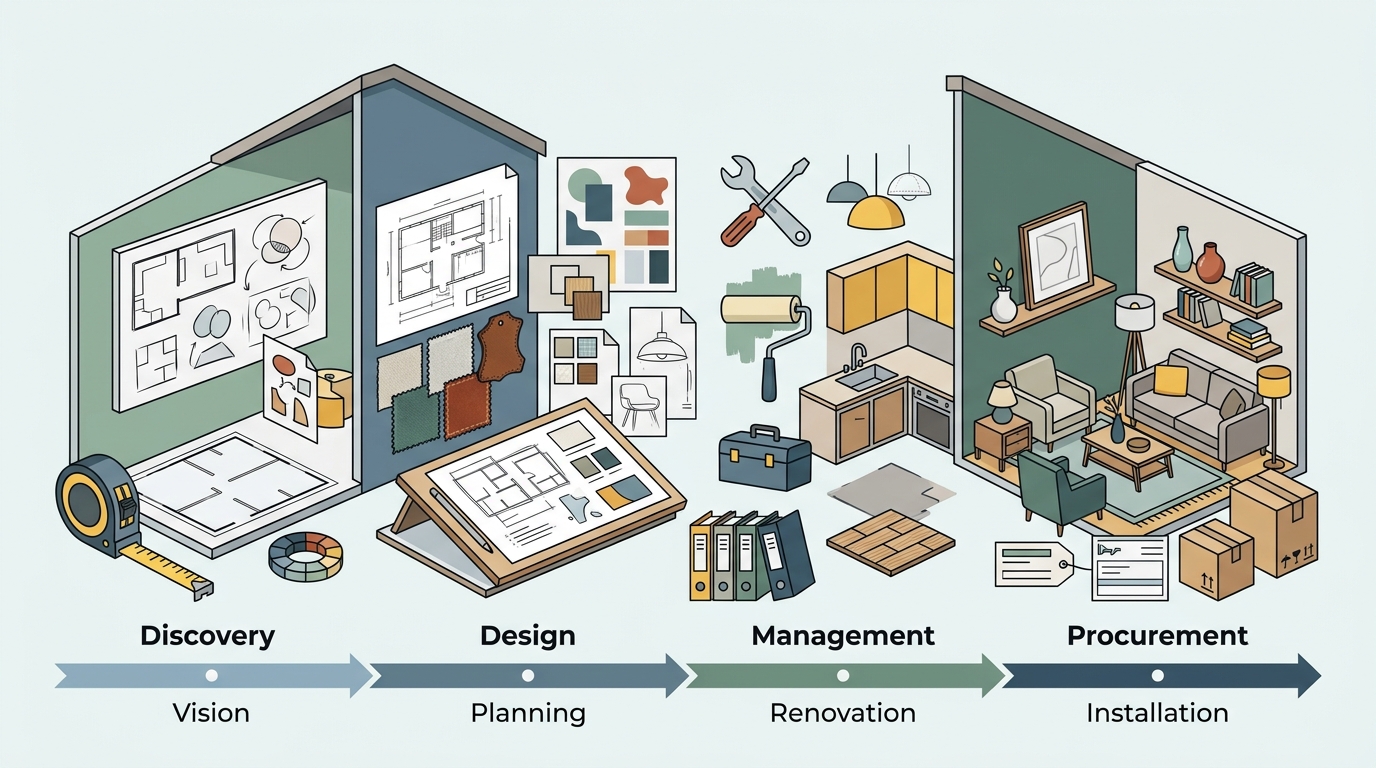
Client Collaboration
You will review the initial plans, conceptual ideas, and an estimated budget with your designer to confirm the project is on track. Feedback at this stage is critical because approved concepts become the creative blueprint for the rest of the process.
Design Development and Documentation
Once the concept is approved, the design team refines broad ideas into precise, executable plans. This phase includes detailed floor plans, elevations, 3D renderings, and a Fixtures, Finishes, and Equipment (FF&E) schedule. An FF&E schedule is a comprehensive document listing every material, finish, fixture, and furnishing specified for the project.
According to the Interior Design Institute, 3D renderings and virtual tours offer a realistic preview of the final space, allowing clients to provide feedback before any demolition begins. Material selections for countertops, tile, cabinetry, and hardware are finalized here, balancing aesthetics, durability, and maintenance requirements.
Procurement and Sourcing
Procurement is the phase where approved selections are ordered and logistics are coordinated. Your designer places orders with vendors and manufacturers, tracks lead times, and arranges delivery and warehousing. At Julieta Alvarez Interiors, sourcing extends to furnishings, art, and accessories that reflect each client's personality while complementing the architectural envelope.
Trade Access Advantage
Full-service designers maintain trade accounts with showrooms and artisan workshops, giving clients access to pieces not available to the general public. This is one of the most tangible benefits of hiring a professional versus managing a renovation on your own.
Construction and Project Management
If your project involves structural changes, the designer coordinates with contractors and tradespeople throughout the build. Tasks include reviewing shop drawings for cabinetry and built-ins, answering requests for information (RFIs), and issuing change orders when site conditions require adjustments. Explore completed renovation projects like this traditional kitchen in Short Hills, NJ to see how careful project management translates into polished results.
Clear documentation during this phase prevents miscommunication and keeps design integrity intact from schematics to execution.
Installation and Reveal
Installation is the moment your home transforms from a construction site into a finished space. Furniture placement, art hanging, and styling happen in real time with the designer on site directing every detail. A final walkthrough follows, during which the designer reviews functionality, answers questions, and provides care instructions for new materials and finishes.
Typical Timelines and Budget Considerations
Project duration depends on scope. The table below offers general estimates based on industry benchmarks from Punchlist.
| Project Type | Estimated Timeline | Key Variables |
|---|---|---|
| Single-room refresh | 2 - 3 months | Furniture lead times, in-stock availability |
| Multi-room renovation | 6 - 12 months | Permitting, contractor schedules |
| Full-home remodel | 1 - 2 years | Structural work, custom fabrication |
| New construction (3,000 sq ft) | ~18 months | Builder coordination, site conditions |
Budget conversations should happen early. Design fees cover planning, coordination, and oversight, while construction costs and furnishings are separate line items. Discussing both upfront ensures decisions feel intentional rather than reactive.
Key Takeaways
- Full-service interior design follows a structured sequence: discovery, concept, development, procurement, construction, and installation.
- An initial consultation establishes lifestyle needs, style preferences, and budget before any design work begins.
- Space planning and concept boards translate abstract ideas into a shared creative blueprint.
- Detailed documentation, including FF&E schedules and 3D renderings, reduces surprises during construction.
- Procurement through trade accounts gives clients access to exclusive furnishings and competitive pricing.
- Timelines range from a few months for a single room to two years for a full-home remodel.
- Early budget alignment between design fees and construction costs keeps the project on track.
Frequently Asked Questions
What does full-service interior design include?
Full-service interior design covers every phase of a project, from initial consultation and concept development through procurement, construction oversight, furniture installation, and final styling. It is a turnkey solution where the designer manages all details on your behalf.
How long does a full-service interior design project take?
Timelines vary by scope. A single-room makeover may take two to three months, while a whole-home renovation can span one to two years depending on permitting, construction complexity, and custom fabrication lead times.
How much does full-service interior design cost?
Costs depend on the project's size, location, and material selections. Design fees, which cover planning and oversight, are separate from construction and furnishing budgets. A transparent designer will outline all cost categories during the discovery phase.
Can I keep existing furniture in a full-service project?
Yes. A skilled designer can integrate pieces with sentimental or functional value into the new scheme, blending existing items with new additions for a cohesive look.
When should I hire an interior designer for a renovation?
Ideally, bring a designer on board before construction planning begins. Early involvement allows the designer to collaborate with architects and contractors on space planning, material selection, and budget allocation from the start.
What is an FF&E schedule?
An FF&E (Fixtures, Finishes, and Equipment) schedule is a detailed document that lists every material, fixture, and furnishing specified for a project. It serves as a reference for contractors, vendors, and the client throughout the build.
Do I need permits for an interior renovation in New Jersey?
Many interior renovations that involve structural, electrical, or plumbing changes require municipal permits in New Jersey. Your designer and general contractor will identify which permits are needed and manage the application process.
Ready to Transform Your Home?
If you are considering a full-service residential interior design project in New Jersey, New York City, Westchester, or Connecticut, schedule a consultation with Julieta Alvarez Interiors today. With a client-centric process built on functionality, personality, and budget adaptability, every project begins with listening and ends with a space you love coming home to. Browse the design portfolio for inspiration, then call (917) 355-4414 to get started.