
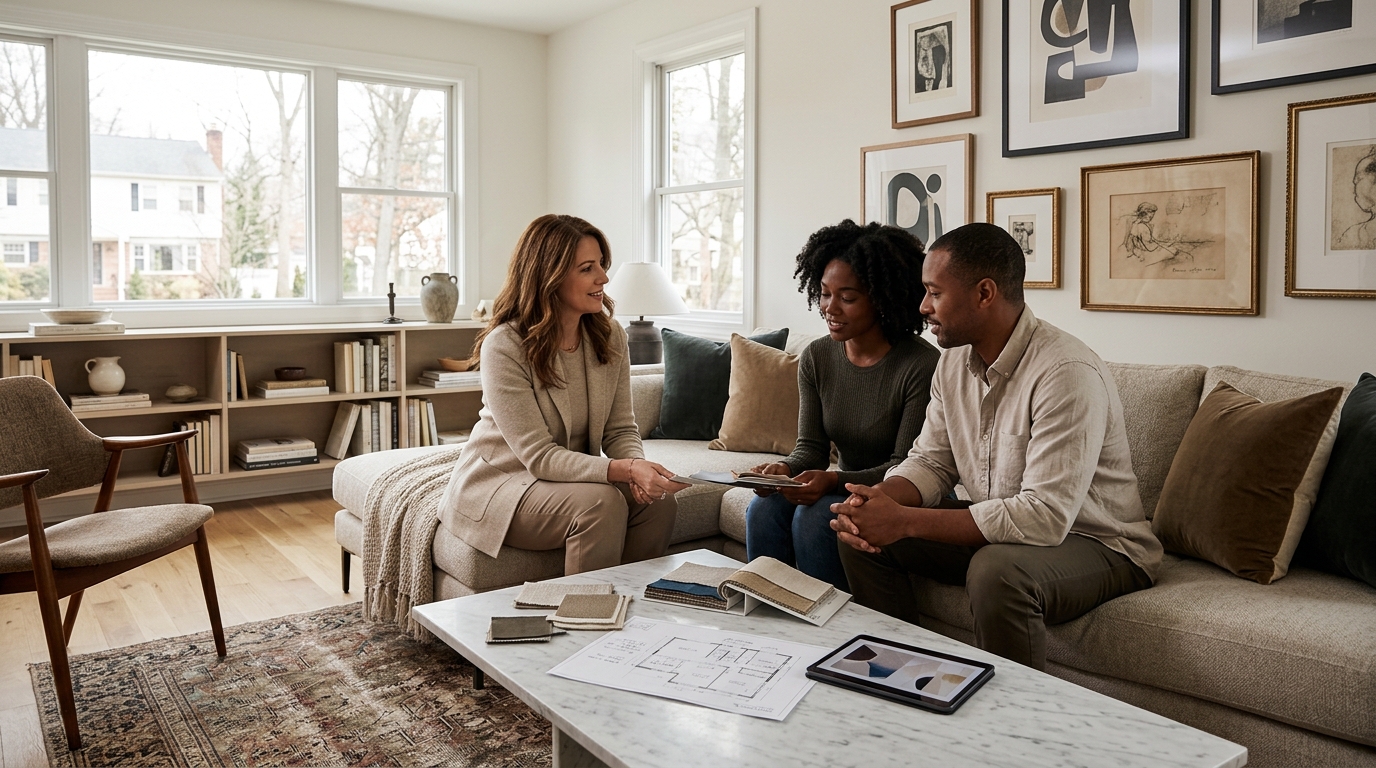
Transforming a house into a home that feels both modern and personal takes more than picking out a few paint swatches. Modern residential interior design is a structured, step-by-step process that balances aesthetics with functionality, ensuring every room reflects the people who live there. Whether you are planning a full home renovation or refreshing a single space, understanding each phase helps you stay on budget, on schedule, and fully satisfied with the result. Below, we walk through the essential steps that professional designers follow from first meeting to final reveal.
Step 1: Initial Consultation and Style Discovery
An initial consultation is the foundational meeting where a designer learns about your lifestyle, preferences, and goals. During this phase, your designer asks about your budget, timeline, must-haves, and deal-breakers. At Julieta Alvarez Interiors, this step is called a "style discovery," an in-depth exploration of what you truly love, from wall colors to specific furnishings.
Coming prepared with inspiration images, a list of priorities, and an honest budget range makes this conversation far more productive. The more detail shared here, the more customized and successful the final design will be.
Step 2: Space Planning and Floor Plans
Space planning is the process of organizing furniture, circulation paths, and functional zones within a room's physical dimensions. This step involves taking precise measurements and evaluating how natural light enters each space. A well-developed floor plan defines how every square foot will be used and ensures the design is both beautiful and practical.
Modern designers often use software like SketchUp or AutoCAD to test layouts digitally before any physical changes happen. This reduces costly errors and helps clients understand the designer's intent early on.
Step 3: Concept Development and Mood Boards
Once the space plan is set, the designer translates your preferences into a visual concept. This typically includes mood boards, preliminary color palettes, fabric samples, and rough sketches. The goal is to establish a cohesive aesthetic direction before ordering a single item.
For modern residential projects, popular directions in 2025 and 2026 include minimalism, Japandi, and what designers call "warm modern," a blend of clean lines with rich textures. At Julieta Alvarez Interiors, concepts often merge new and old pieces, different textures, and mixed metal finishes to create spaces that feel chic yet comfortable. You can see examples in the firm's design portfolio.
Step 4: Material and Furnishing Selection
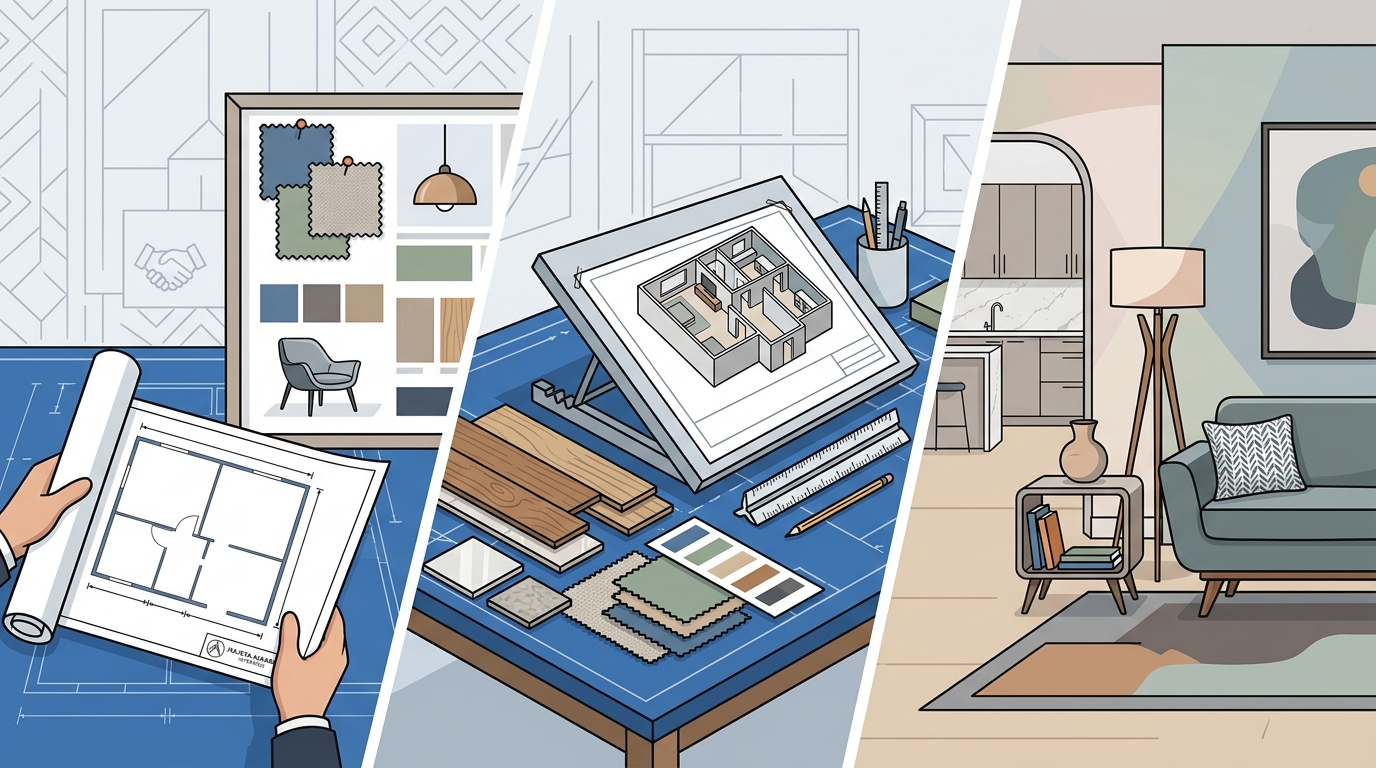
Material selection is the phase where a designer chooses finishes, surfaces, fixtures, and furnishings that align with the approved concept. Decisions here cover everything from tile and countertops to throw pillows and art. The selection process weighs aesthetic appeal, durability, and maintenance requirements for each item.
A full-service firm like Julieta Alvarez Interiors sources from trade-only vendors and also provides custom-made furniture and millwork, including wall-fixing cabinets and modular kitchens. Budget is always a guiding factor; the philosophy is that style has no budget, meaning great design is achievable at every price point.
Step 5: Visualization and Client Approval
Before construction or purchasing begins, designers present 3D renderings, virtual tours, or detailed presentation boards. These visualizations offer a realistic preview of the completed space, letting you evaluate scale, proportion, color, and texture in context.
This approval step is critical. It builds client confidence and catches potential issues before they become expensive changes. Open discussion during this phase ensures the final design genuinely reflects your goals.
Step 6: Implementation and Installation
Implementation is the execution phase where plans become reality. It involves coordinating contractors, managing deliveries, and overseeing construction timelines. Your designer works hand-in-hand with architects, contractors, and subcontractors to keep the project aligned with the approved design.
For kitchen and bathroom renovations, this phase carries extra complexity because of plumbing, electrical, and cabinetry sequencing. A structured process prevents costly rework and keeps everyone on the same page. Small projects may wrap up in a few weeks, while large renovations can take several months.
Step 7: Final Styling and Reveal
The final styling day is when accessories, art, books, and decorative objects are placed to complete the vision. Furniture is positioned according to the plan, lighting is adjusted, and every detail is reviewed. This is the moment a designed space truly becomes your home.
Professional designers treat this phase as an art form. Layering textures, adjusting pillow placement, and hanging artwork at precisely the right height are small moves that make a dramatic difference in the finished result.
DIY vs. Professional Interior Design: A Comparison
| Factor | DIY Approach | Professional Designer |
|---|---|---|
| Cost Control | Lower upfront fees; risk of expensive mistakes | Design fee investment; avoids costly rework |
| Access to Trade Resources | Retail pricing only | Trade-only vendors, custom fabrication, wholesale pricing |
| Timeline Management | Self-managed; often delayed | Structured phases with deadlines |
| Space Planning Expertise | Trial and error | Software-driven layouts optimized for flow |
| Cohesive Result | Can feel disjointed | Every room connects to a unified concept |
| Project Coordination | Homeowner handles all trades | Designer manages contractors and vendors |
According to HomeAdvisor, 38% of homeowners regret not seeking professional help during their projects. Working with an experienced firm can save both time and money in the long run.
Key Takeaways
- Modern residential interior design follows a structured, seven-step process from consultation through final styling.
- The initial style discovery sets the foundation; come prepared with inspiration and an honest budget.
- Space planning with digital tools prevents costly layout mistakes before construction starts.
- Concept development through mood boards and color palettes ensures a cohesive aesthetic before any purchases.
- Material selection balances beauty, durability, and budget with access to trade-only resources.
- Professional project management during implementation keeps contractors, timelines, and costs on track.
- Final styling transforms a designed space into a personalized home with curated details.
Frequently Asked Questions
What is the first step in modern residential interior design?
The first step is always an initial consultation or style discovery. This is when you sit down with a designer to discuss your lifestyle, needs, preferences, and budget. It sets the direction for every decision that follows.
How long does a full residential interior design project take?
It depends on scope and complexity. Small decorating projects can be completed in a few weeks, while full home renovations typically take 6 to 18 months from first meeting to final reveal.
Do I need a professional designer, or can I do it myself?
You can certainly tackle projects yourself, but a professional brings trade-only sourcing, software-driven space planning, and project coordination that reduces mistakes. Research shows that over a third of homeowners wish they had hired a professional.
What is space planning in interior design?
Space planning is the process of organizing furniture layouts, traffic flow, and functional zones within measured room dimensions. It bridges creativity and practicality, ensuring a room works as beautifully as it looks.
How much does it cost to hire an interior designer in New Jersey?
Costs vary based on scope, from flat-fee consultations to full-service project management. Many firms, including Julieta Alvarez Interiors, offer flexible pricing and work with a range of budgets.
What is a mood board and why does it matter?
A mood board is a visual collage of colors, textures, materials, and furniture ideas that establishes the creative direction for a project. It helps both designer and client align on aesthetics before any money is spent on materials.
Can I hire a designer for just one room?
Absolutely. Many designers offer single-room makeover services that transform individual spaces, whether it is a bedroom, living room, or home office.
What design styles are trending for modern homes in 2025 and 2026?
Popular styles include minimalism, Japandi (a blend of Japanese and Scandinavian aesthetics), warm modern, and vintage revival. Textured walls such as limewash and decorative plaster are also gaining popularity.
Ready to Transform Your Home?
If you are planning a modern residential interior design project in New Jersey, New York, Westchester, or Connecticut, Julieta Alvarez Interiors can guide you from first concept to final reveal. With over a decade of experience and a client-first approach, the firm delivers spaces that are functional, personal, and beautiful. Schedule your consultation today by calling (917) 355-4414.